
DML vs EML: Which Laser Is Better for High-Speed Optical Communication?
In modern optical communication systems, the choice of laser source directly affects modulation bandwidth, transmission distance, signal quality, power consumption, system complexity, and overall cost. Two technologies frequently considered for high-speed optical transmission are the Directly Modulated Laser (DML) and the Electro-Absorption Modulated Laser (EML).
Both technologies can support high-speed optical communication, but they achieve optical modulation in fundamentally different ways. A DML directly modulates the injection current of the semiconductor laser, while an EML combines a continuous-wave laser with an integrated electro-absorption modulator.
So, is DML better than EML? The answer depends on the application. DML can provide an attractive combination of low cost, low power consumption, compact structure, and sufficient modulation bandwidth for many optical communication and RF-over-Fiber applications. EML, on the other hand, can offer advantages in applications where very high-speed operation, low chirp, and longer transmission distance are critical.
This article compares DML vs EML in terms of operating principle, modulation method, bandwidth, chirp, optical power, linearity, power consumption, cost, transmission distance, and applications, and explains how to select the right laser technology for a specific optical system.

What Is a Directly Modulated Laser (DML)?
A Directly Modulated Laser (DML) uses the semiconductor laser itself as both the optical source and modulation element. In a typical DML architecture, an electrical signal is applied to the laser through a high-speed laser driver. Changes in injection current cause changes in the carrier density inside the active region. These changes directly modify the optical output of the laser, converting the electrical signal into an intensity-modulated optical signal.
A simplified DML signal path is:
Electrical Signal → High-Speed Driver → DFB Laser → Modulated Optical Signal
A DML can be based on a Distributed Feedback (DFB) laser, which provides stable single-mode optical output and is widely used at telecom wavelengths such as 1310 nm and 1550 nm. One of the most important advantages of DML is its relatively simple architecture. The laser does not require a separate external optical modulator, which can reduce component count, optical complexity, power consumption, and cost.
For applications such as RF-over-Fiber, antenna remoting, analog optical links, telecommunications, telemetry, tracking, and short- to medium-reach optical transmission, DML can provide a practical balance between performance and system cost.
What Is an Electro-Absorption Modulated Laser (EML)?
An Electro-Absorption Modulated Laser (EML) combines a semiconductor laser with an electro-absorption modulator (EAM) in an integrated device. The laser section generates relatively continuous optical power, while the electro-absorption modulator controls the amount of light transmitted through the device by changing its absorption characteristics in response to an electrical signal.
A simplified EML architecture is:
Electrical Signal → Driver → Laser + Electro-Absorption Modulator → Modulated Optical Signal
The separation between optical generation and modulation provides important performance advantages. Because the laser does not have to experience the same degree of direct current modulation as a DML, the EML can achieve better control of frequency chirp and can be advantageous for high-speed, longer-distance optical transmission where chromatic dispersion becomes an important limitation.
However, the additional modulator section also increases device and driving complexity. As a result, EMLs are often associated with higher cost and power requirements than simpler DML architectures.
DML vs EML: How Do They Differ?
The fundamental difference is how the optical signal is modulated.
DML: Direct Current Modulation
In a DML, the electrical signal directly changes the laser injection current. The changing carrier density affects both the optical intensity and the refractive index of the active region. This allows the device to generate an optical signal without a separate modulator.
EML: External Optical Modulation
In an EML, the laser generates light while the integrated EAM independently modulates the optical signal. This separation provides greater control over the modulation process and can reduce the influence of direct current modulation on the optical frequency.
The architectural difference leads to the main performance differences between the two technologies.
| Parameter | DML | EML |
| Modulation method | Direct laser-current modulation | Electro-absorption modulation |
| Optical structure | Relatively simple | More complex |
| Modulation bandwidth | High, depending on device design | Very high, depending on device design |
| Chirp | Generally higher | Generally lower |
| Linearity | Good for many applications | Strong performance in demanding high-speed links |
| Power consumption | Generally lower | Generally higher |
| Cost | Generally lower | Generally higher |
| Driver complexity | Lower | Higher |
| Transmission distance | Short to medium reach applications | Medium to long reach applications |
| System integration | Relatively simple | More complex |
| Typical applications | RF-over-Fiber, telecom, analog links | High-speed telecom and long-reach optical links |
These are general technology-level comparisons. Actual performance depends on the laser structure, wavelength, modulation bandwidth, package, driver, optical power, fiber, receiver, and complete link design.
DML vs EML Bandwidth: Which Is Faster?
Modulation bandwidth is one of the most important parameters when selecting a laser for high-speed optical transmission. For a DML, the modulation response is determined by the dynamic characteristics of the semiconductor laser, including carrier lifetime, photon lifetime, resonance frequency, damping, parasitic effects, package design, and driver performance.
Modern high-speed DML devices can provide significantly higher bandwidth than traditional directly modulated laser technologies. For example, DFB DML products are available with bandwidths extending into the 10 GHz, 12 GHz, and 18 GHz class, depending on the specific device design. EMLs can also achieve very high modulation bandwidth because the laser and electro-absorption modulator perform different functions. The EAM can be designed specifically for high-speed optical intensity modulation.
However, it is important not to assume that every EML is automatically faster than every DML. The actual bandwidth depends on:
- Device design
- Operating wavelength
- RF driver
- Package parasitics
- Electrical impedance
- Bias conditions
- Temperature
- Modulation format
- Measurement conditions
Therefore, engineers should compare the specified 3 dB modulation bandwidth and complete operating conditions rather than comparing DML and EML technologies based solely on their names.
When Is DML Bandwidth Sufficient?
For many RF and analog optical applications, a DML with appropriate bandwidth can provide excellent performance without the additional complexity of an EML. This is particularly relevant to:
- RF-over-Fiber
- Antenna remoting
- Analog optical links
- Cellular communication
- Telemetry
- Tracking systems
- Short- and medium-reach optical communication
The correct question is therefore not simply “Is DML fast enough?”, but rather “Does the DML provide sufficient bandwidth and linearity for my system?”
DML vs EML Chirp
Frequency chirp is one of the most important technical differences between DML and EML. In a DML, changing the injection current changes the carrier density in the laser’s active region. This affects not only optical power but also the refractive index of the semiconductor material. As a result, the instantaneous optical frequency can change during modulation. This phenomenon is known as frequency chirp.
Chirp becomes particularly important when an optical signal travels through optical fiber because the different spectral components of a chirped signal can experience different propagation characteristics. The combination of chirp and fiber chromatic dispersion can lead to:
- Pulse broadening
- Signal distortion
- Reduced eye opening
- Higher bit-error rates
- Reduced transmission margin
An EML can reduce this problem because the laser and optical modulation functions are separated. The EAM changes optical transmission while the laser can operate under relatively stable conditions. For this reason, EML is often preferred when low chirp and strong dispersion tolerance are critical. However, DML chirp does not make DML unsuitable for optical communication. Modern DML designs can achieve controlled chirp characteristics, and the practical impact depends heavily on wavelength, fiber type, modulation speed, transmission distance, and system architecture.
For short- and medium-reach systems, the advantages of DML in simplicity, cost, and power consumption can outweigh the disadvantages associated with higher chirp.

DML vs EML Optical Output Power
Optical output power determines how much optical signal is available to overcome losses throughout an optical link. A simplified optical link budget can include:
Laser Output Power − Fiber Loss − Connector Loss − Splitter Loss − Other System Losses = Received Optical Power
DML and EML devices can both provide useful optical output power, but actual performance depends on the specific laser structure and operating conditions. For DML, output power is influenced by:
- Bias current
- Modulation current
- Slope efficiency
- Temperature
- Laser design
- Wavelength
- Package configuration
For EML, the output is also affected by the characteristics of the integrated electro-absorption modulator and its operating voltage. When selecting a device, engineers should therefore avoid evaluating optical power independently. Output power, receiver sensitivity, fiber loss, transmission distance, and modulation performance should be evaluated as one complete link budget.
A laser with higher output power is not automatically the better solution if it has excessive power consumption or does not meet the required modulation and linearity specifications.
DML vs EML Linearity
For digital optical communication, bandwidth and transmission distance are often major considerations. For analog optical transmission and RF-over-Fiber, however, linearity can be equally important. A nonlinear laser can introduce distortion into the transmitted RF signal. This can generate unwanted harmonic and intermodulation components and reduce the usable dynamic range of the optical link.
Important parameters can include:
- Linearity
- Harmonic distortion
- Intermodulation distortion
- RF input level
- Spurious-Free Dynamic Range (SFDR)
- Relative Intensity Noise (RIN)
This is one reason DML selection for RF applications should not be based on bandwidth alone.
A DML used for antenna remoting, analog RF links, telemetry, tracking, or wireless signal distribution should be evaluated for its complete RF performance. For example, a laser with an 18 GHz bandwidth may appear attractive for a high-frequency application, but if its linearity or noise performance does not meet the system requirements, the additional bandwidth may provide little practical benefit.
DML vs EML Power Consumption
Power consumption is another important factor, especially for systems with many optical channels or limited thermal-management capability. A DML has a relatively straightforward optical architecture because the laser itself performs the modulation. There is no separate electro-absorption modulator section that needs to be driven.
This can contribute to:
- Lower component count
- Lower electrical complexity
- Lower power consumption
- Simpler thermal management
- Smaller system size
An EML includes both a laser section and an electro-absorption modulator. The additional active section and associated driving requirements can increase system complexity and power consumption. This makes DML particularly attractive for cost-sensitive and power-sensitive optical systems.
However, actual system power consumption depends on more than the optical device itself. The laser driver, temperature controller, bias circuitry, receiver, cooling system, and other electronics must also be considered.
DML vs EML Cost
Cost is one of the strongest arguments for DML. A DML can integrate optical generation and modulation into one relatively simple semiconductor structure. Compared with an EML, this can reduce:
- Optical component complexity
- Assembly complexity
- Driver requirements
- Packaging complexity
- Overall bill of materials
For high-volume optical systems, these differences can become significant.
EML technology offers performance advantages that can justify the additional cost when the application requires:
- Very high-speed operation
- Low chirp
- Long transmission distance
- Strong dispersion tolerance
- High-performance telecom transmission
Therefore, the right comparison is not simply:
DML = cheap, EML = expensive
Instead, engineers should consider performance per dollar. If a DML already provides sufficient bandwidth, optical power, linearity, and transmission performance, selecting an EML may add cost without providing meaningful system benefits.
DML vs EML Transmission Distance
Transmission distance is strongly related to chirp, fiber dispersion, wavelength, modulation speed, optical power, receiver sensitivity, and link budget.
DML can be an excellent choice for short- and medium-reach optical links where dispersion is manageable. As transmission distance and modulation speed increase, however, the interaction between laser chirp and fiber dispersion becomes increasingly important. This is where EML can provide an advantage.
A simplified selection principle is:
- Short/medium reach + cost and power priorities → DML
- Longer reach + high speed + low chirp requirements → EML
Nevertheless, there is no universal distance at which a system must change from DML to EML. The appropriate technology should be determined from the complete optical link budget and transmission requirements.
DML vs EML for Different Applications
The best laser technology depends heavily on the application.
1. RF-over-Fiber
DML is often an attractive choice. RF-over-Fiber systems require sufficient bandwidth, good linearity, low noise, and practical optical power. A DML can provide these characteristics while keeping system architecture relatively simple.
Typical applications include:
- Wireless signal distribution
- Antenna remoting
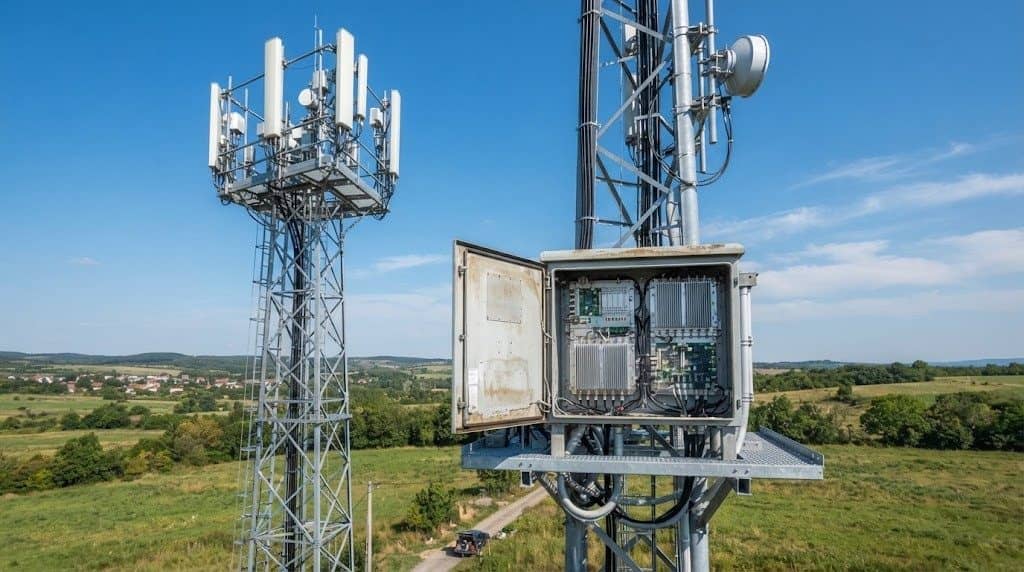
- Cellular infrastructure
- RF signal extension
- Remote radio systems
2. Antenna Remoting
DML is particularly suitable for antenna remoting where RF signals need to be converted into optical signals and transmitted over fiber. Low power consumption, compact implementation, and adequate modulation bandwidth can be important advantages.
3. Analog RF Links
Analog links place significant emphasis on linearity, RIN, bandwidth, and dynamic range. A properly selected DML can provide an effective solution for many analog RF transmission systems.
4. Telecommunications
Both DML and EML can be used in telecommunications. DML is attractive where cost, power, and system simplicity are important. EML becomes more attractive as speed, distance, and dispersion requirements become more demanding.
5. Long-Reach Optical Communication
EML generally has an advantage when low chirp and high-speed transmission over dispersive fiber are major requirements.
6. High-Speed Optical Networks
At very high data rates, engineers need to evaluate bandwidth, chirp, extinction ratio, optical power, dispersion tolerance, driver performance, and receiver requirements together. Depending on these conditions, either DML or EML may be appropriate.

DML vs EML: Which One Should You Choose?
There is no universal winner.
Choose DML when you need:
- Lower overall system cost
- Lower power consumption
- Simpler optical architecture
- Compact integration
- High modulation bandwidth
- Good RF performance
- RF-over-Fiber transmission
- Antenna remoting
- Analog optical links
- Short- to medium-reach transmission
Choose EML when you need:
- Very high-speed optical transmission
- Low frequency chirp
- Longer transmission distance
- Strong tolerance to chromatic dispersion
- High-performance telecom links
- More demanding transmission margins
A useful engineering principle is:
Choose DML when its performance meets the system requirements and simplicity, cost, and power efficiency are important. Choose EML when the additional performance margin provided by low chirp and advanced modulation capability justifies the additional complexity and cost.
Why Choose a DFB DML Laser?
For applications where DML is appropriate, the laser structure itself remains an important selection factor. A DFB DML laser combines the advantages of direct modulation with the wavelength stability and single-mode characteristics associated with Distributed Feedback laser technology.
The DFB structure uses a built-in grating to favor a specific longitudinal mode. This provides a more controlled optical spectrum than conventional multimode laser structures. Important advantages can include:
- Single-mode optical operation
- Stable operating wavelength
- Good spectral characteristics
- High-speed modulation capability
- Compatibility with telecom wavelengths
- Compact optical architecture
- Suitability for RF and optical communication systems
For engineers selecting a DML device, the DFB structure can therefore provide a useful combination of wavelength stability, optical performance, and direct modulation capability.
NEON DFB DML Laser Solutions
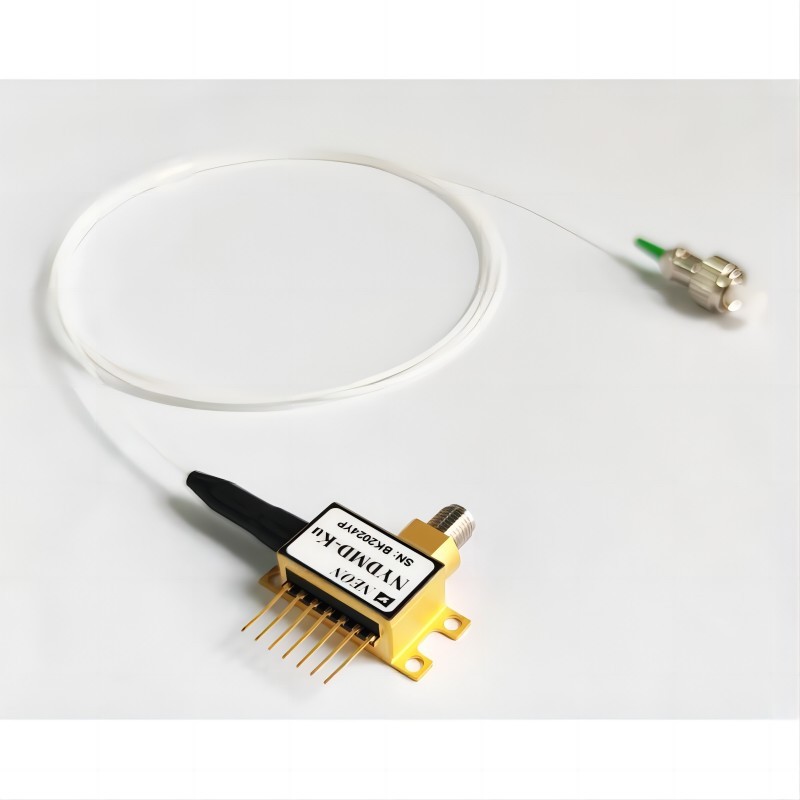
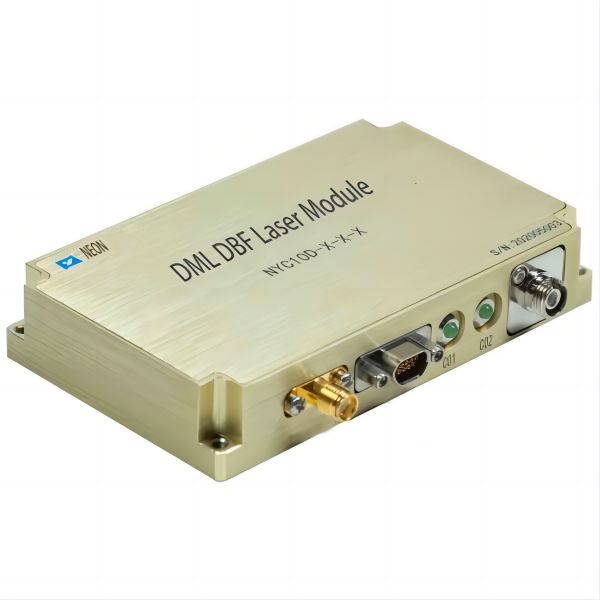
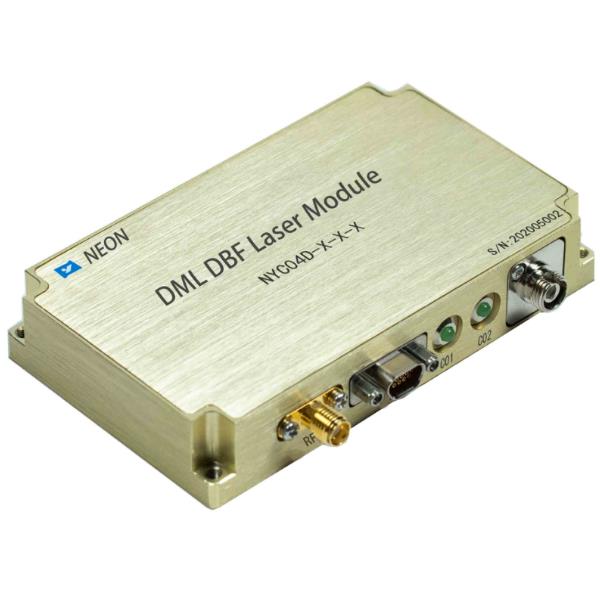
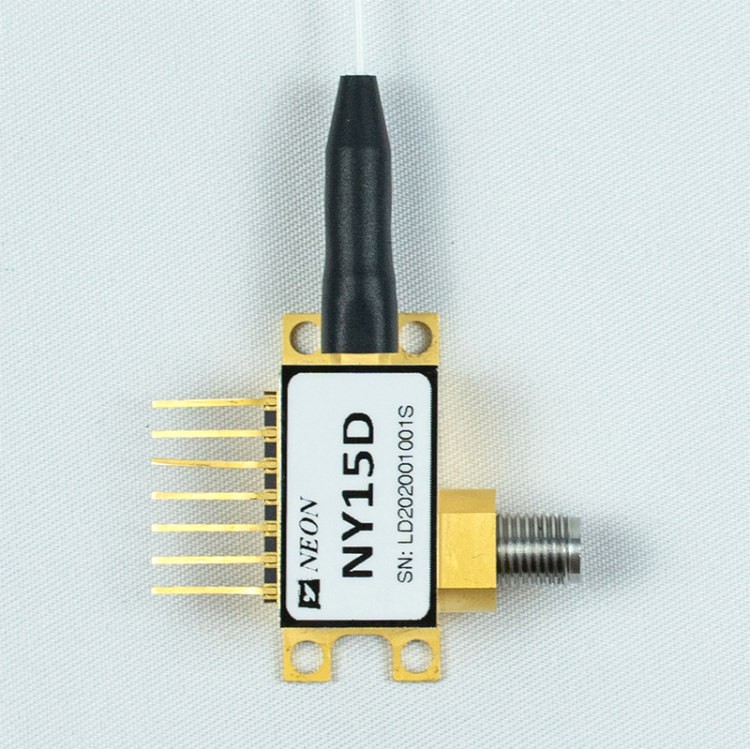
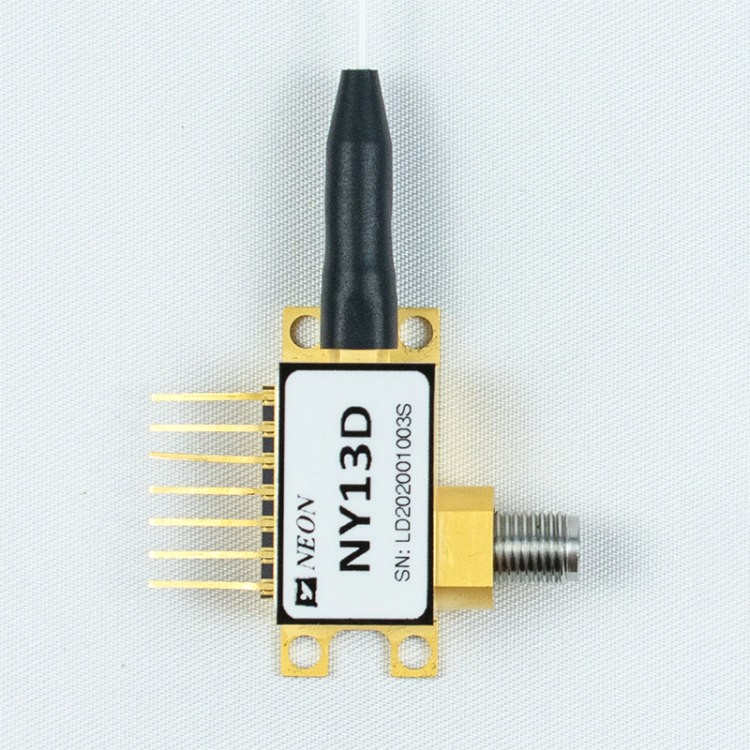
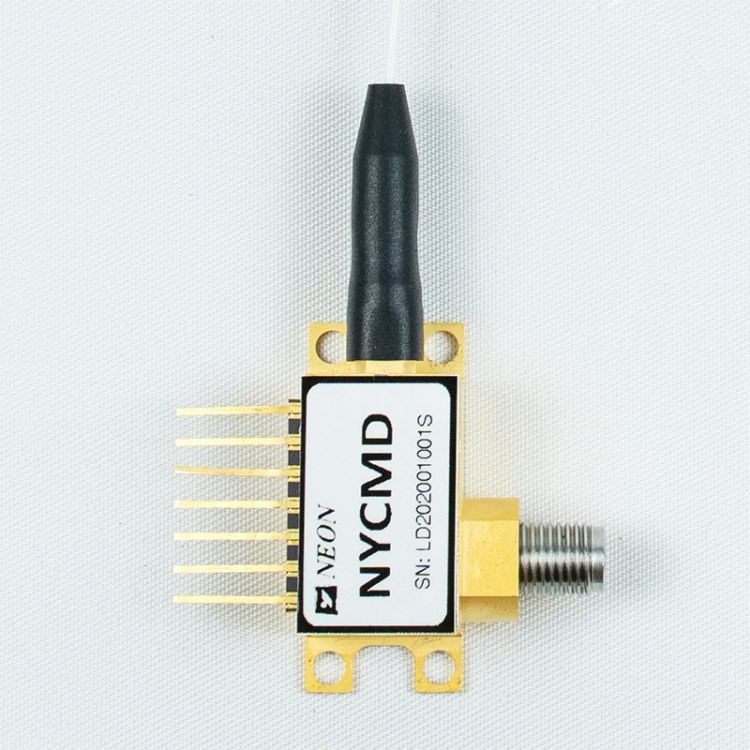
NEON provides a range of DFB DML laser solutions designed for high-speed optical communication and RF photonics applications.
Depending on the required wavelength, bandwidth, output power, and application, engineers can evaluate different DML configurations, including 1310 nm and 1550 nm devices as well as high-bandwidth DML solutions.
For example, the NEON DML product portfolio includes solutions covering different bandwidth requirements, with products extending into the 10+ GHz, 12 GHz, and 18 GHz performance classes. This allows system designers to select a DML according to the actual requirements rather than choosing a device based on a single specification.
Typical applications include:
- RF-over-Fiber
- Antenna remoting
- Analog RF links
- Telecommunications
- Tracking
- Telemetry
- Wireless communication
- High-speed optical transmission
When selecting a DML laser, engineers should provide the supplier with key application information such as operating wavelength, required modulation bandwidth, optical output power, RF frequency range, transmission distance, fiber type, operating temperature, package configuration, and interface requirements. This information allows the laser configuration to be matched more accurately to the optical and RF system.
Frequently Asked Questions About DML vs EML
1. What is the main difference between DML and EML?
DML directly modulates the laser injection current, while EML uses a laser combined with an electro-absorption modulator to control the optical signal.
2. Is DML better than EML?
Neither technology is universally better. DML is often advantageous for cost-sensitive, low-power, compact, and short- to medium-reach applications, while EML can be preferable for demanding high-speed and long-reach systems.
3. Which is cheaper, DML or EML?
DML is generally less expensive because its optical structure and driving architecture can be simpler. However, actual cost depends on device specifications, packaging, volume, and system requirements.
4. Which consumes less power, DML or EML?
DML generally has lower power requirements because it does not require a separate electro-absorption modulator. Total system power still depends on the driver, thermal management, and other electronics.
5. Does DML have higher chirp than EML?
Generally, yes. Directly modulating the laser current can introduce frequency chirp, while EML separates light generation and modulation and can therefore provide better chirp control.
6. Which is better for long-distance optical communication?
EML is generally more suitable when long transmission distance, high speed, and low chirp are critical. However, the final choice should be based on the complete optical link budget.
7. Can DML support high-speed optical communication?
Yes. Modern high-speed DFB DML devices can provide substantial modulation bandwidth and can support many high-speed optical communication and RF-over-Fiber applications.
8. Is DML suitable for RF-over-Fiber?
Yes. DML is widely attractive for RF-over-Fiber because it can combine high bandwidth, practical linearity, relatively low power consumption, and a simpler architecture.