

CPO vs Pluggable Optics: Key Differences, Power, Deployment & Selection
As the transition of AI data centers and high-performance computing systems to higher bandwidth and higher interconnect density, optical connectivity is becoming a system-level design consideration. There are two architectures gaining more and more attention: co-packaged optics (CPO) and pluggable optics.
The key difference is not merely whether an optical module is removable. CPO and pluggable optics bring optical conversion at various points within the system, which influences electrical connectivity, power, thermal management, packaging, serviceability, and upgrade strategies. Understanding these system-level trade-offs is a must for engineers evaluating CPO vs pluggable optics.

CPO and Pluggable Optics: Two Different Optical Interconnect Architectures
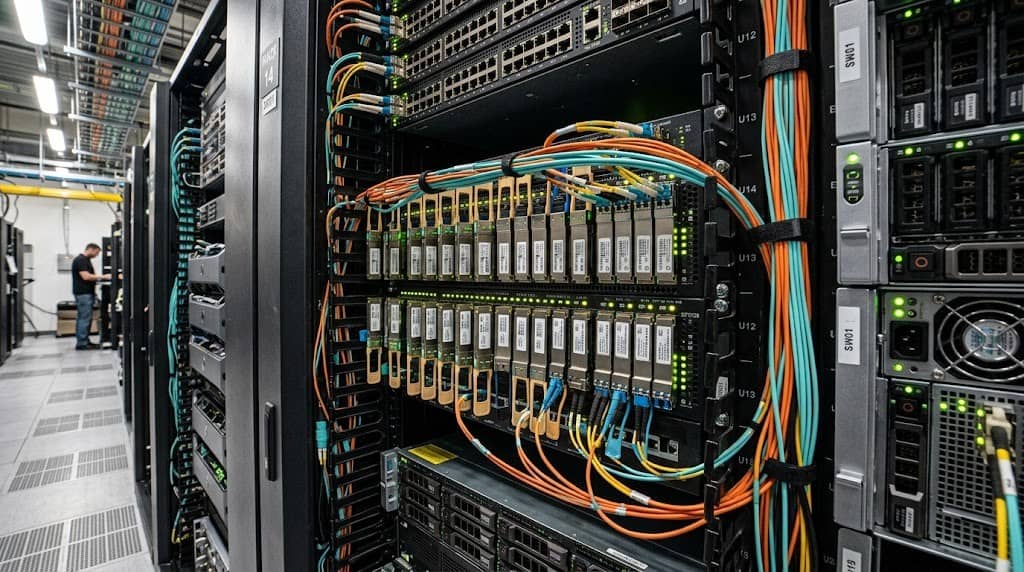
In a conventional pluggable optics architecture, an optical transceiver converts electrical and optical signals through a removable module installed at the front panel of a switch or network device. Electrical signals travel from the switch ASIC through the PCB to the optical module, where electrical and optical signals are converted. The simplified signal path is:
ASIC → PCB electrical connection → pluggable optical module → fiber
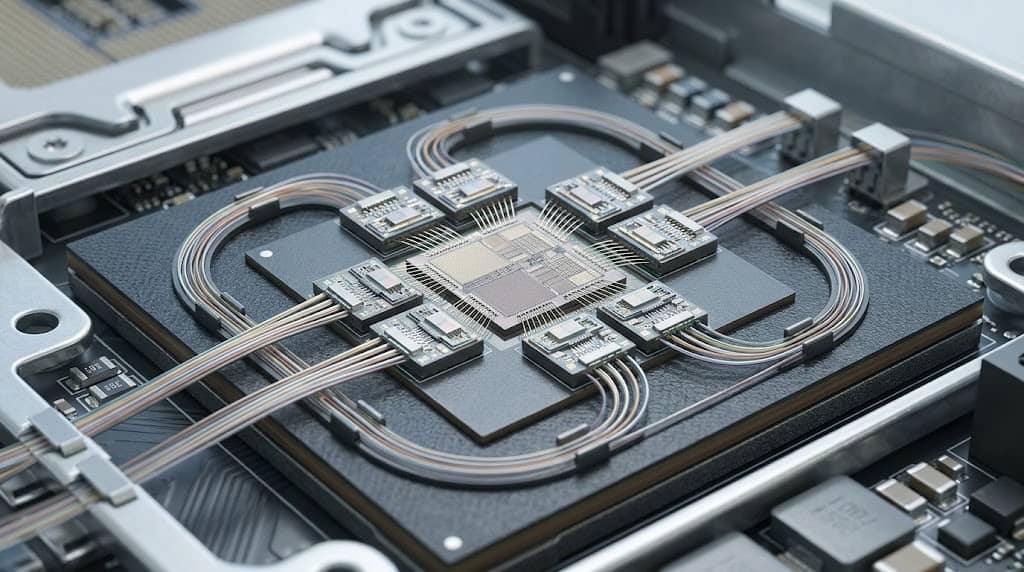
In a co-packaged optics (CPO) architecture, the optical engine is positioned much closer to the ASIC or integrated into the same package-level architecture.
The signal path can therefore be simplified as:
ASIC → short electrical connection → optical engine → fiber
This difference in physical location influences the complete optical interconnect architecture.
Pluggable optics emphasize modularity and field serviceability, while CPO emphasizes tighter integration between high-performance silicon and optical interfaces.
CPO vs Pluggable Optics: Key Engineering Differences
The following comparison highlights the major differences between CPO and pluggable optics:
| Engineering Factor | Pluggable Optics | CPO |
| Optical engine location | Front-panel module | Close to ASIC/package |
| Electrical connection | Relatively longer | Very short |
| Module replacement | Straightforward | More system-dependent |
| Serviceability | High | Lower integration flexibility |
| Upgrade flexibility | High | More architecture-dependent |
| Thermal interaction | More separated | Closely coupled with ASIC |
| Packaging complexity | Lower | Higher |
| Optical density potential | Limited by faceplate | Higher integration potential |
| System integration | Modular | Highly integrated |
These differences do not make one architecture universally suitable. Instead, they reflect different approaches to solving high-speed optical interconnect challenges.
Why CPO Is Being Considered for AI Data Centers
The growth of AI computing is increasing the number and bandwidth of connections between GPUs, accelerators, switches, and other computing resources. At these data rates, system designers must manage more than optical transmission. The complete electrical and optical path must meet requirements for:
- Signal integrity
- Power consumption
- Thermal performance
- Port density
- Latency
- System scalability
CPO addresses part of this challenge by moving optical conversion closer to high-performance switching or computing silicon. Shorter high-speed electrical paths can help reduce some of the limitations associated with electrical interconnects.
This makes CPO optical interconnects particularly relevant to future high-density AI centers. However, CPO also introduces new engineering requirements. Optical engines operate in a highly integrated environment, so packaging, cooling, optical coupling, manufacturing, and maintenance must be considered together.
Therefore, CPO should be viewed as a system architecture change, rather than simply a replacement for a conventional optical transceiver.
Power, Thermal and Signal-Integrity Considerations
Power and signal integrity are important factors when comparing CPO vs pluggable optics.
1. Electrical Power
As electrical data rates increase, electrical channels become more demanding. Longer interconnects can introduce greater loss and require additional signal conditioning.
By positioning optical conversion closer to the ASIC, CPO can reduce the distance over which high-speed electrical signals travel. This can create opportunities for more efficient high-speed interconnect architectures.
2. Signal Integrity
High-speed electrical channels must be designed around parameters such as:
- Insertion loss
- Return loss
- Crosstalk
- Impedance discontinuities
- Electromagnetic interference
CPO can shorten the electrical path, but it does not eliminate signal-integrity challenges. Instead, some of the design complexity moves into package-level and optical-engine integration.
3. Thermal Management
Thermal design is another important distinction. With pluggable optics, the optical module is physically separated from the main ASIC and can have its own thermal environment.
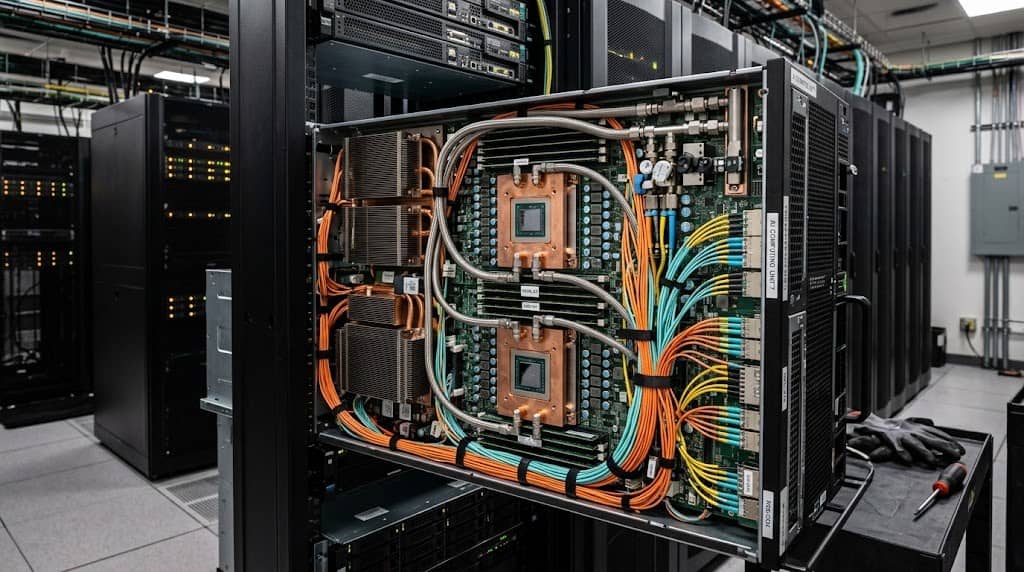
With CPO, optical components are positioned much closer to high-power silicon. This creates tighter thermal coupling and places greater demands on package and cooling design.
Consequently, engineers should not evaluate CPO power consumption independently from thermal architecture. The relevant question is: How can the complete system balance electrical power, optical performance, thermal dissipation, and integration requirements?
Deployment, Maintenance and Upgrade Differences
The difference between CPO and pluggable optics becomes especially important during the system lifecycle. With pluggable optics, an optical tranciver module can generally be replaced independently when it fails or when network requirements change. Different modules can also be selected according to transmission distance, optical interface, or network configuration.
This modularity simplifies:
- Field replacement
- Spare-parts management
- Incremental upgrades
- Network configuration changes
CPO uses a more integrated architecture. Because the optical engine is closely associated with the switching or computing platform, maintenance can become more dependent on the complete system design. The two approaches therefore represent different lifecycle models:
- Pluggable optics: Install → operate → replace or upgrade individual modules
- CPO: Design → integrate → deploy → maintain as a more tightly coupled platform
For large-scale deployments, this difference can affect maintenance procedures, system upgrades, inventory planning, and equipment lifecycle management.
CPO vs Pluggable Optics for Different Applications
The appropriate architecture depends on application requirements rather than bandwidth alone.
1. AI and Hyperscale Data Centers
CPO may be considered when high optical density, tight power budgets, and close integration between computing silicon and optical interfaces are important.
2. Enterprise Data Centers
Pluggable optics can be useful where modular upgrades, equipment compatibility, and straightforward field replacement are priorities.
3. High-Performance Computing
HPC systems with highly integrated accelerator and processor networks may consider CPO when electrical interconnect constraints become increasingly significant. Packaging and serviceability must also be evaluated.
4. Telecom and Data Center Interconnect
Pluggable optics can provide flexibility for applications requiring different optical reaches, configurations, or incremental network upgrades.
The right decision therefore depends on the complete system architecture, including bandwidth, power, thermal requirements, serviceability, packaging, and lifecycle strategy.
What Should Engineers Consider Before Choosing CPO or Pluggable Optics?
Before selecting an optical interconnect architecture, engineers should evaluate the following factors:
| Selection Factor | Key Question |
| Bandwidth | What aggregate and per-channel capacity is required? |
| Electrical path | How long is the high-speed electrical connection? |
| Power budget | How much power can the optical interconnect consume? |
| Thermal design | Can heat be removed effectively around the ASIC? |
| Optical density | How many optical interfaces are required? |
| Serviceability | How easily must failed optical components be replaced? |
| Upgrade strategy | Will optical interfaces need independent upgrades? |
| Packaging | How much system-level integration is practical? |
| Fiber interface | What fiber count, reach, and connector configuration are required? |
| Lifecycle | Is the platform designed for modular or integrated upgrades? |
A practical CPO vs pluggable optics selection process should therefore evaluate the entire system rather than focusing on a single specification. For example, a high-density AI platform may prioritize optical integration and electrical-path optimization, while a network requiring frequent module replacement may place greater value on pluggable flexibility.
CPO vs Pluggable Optics: Key Takeaways
CPO and pluggable optics are different optical interconnect architectures designed around different system priorities.
- Pluggable optics emphasize modularity, field replacement, and upgrade flexibility.
- CPO places optical engines closer to high-performance silicon to support highly integrated optical interconnect architectures.
- CPO can help address certain electrical interconnect and density challenges, but introduces additional packaging and thermal requirements.
- Pluggable optics generally provide greater module-level serviceability and configuration flexibility.
- AI data centers and high-performance computing are important application areas for evaluating CPO architectures.
- The appropriate choice depends on bandwidth, power, thermal management, optical density, serviceability, packaging, and lifecycle requirements.
The key engineering question is therefore not simply “CPO or pluggable optics?” It is: Which optical interconnect architecture provides the right balance of performance, integration, serviceability, and lifecycle flexibility for the target system?
Frequently Asked Questions
Q1: What is the main difference between CPO and pluggable optics?
The main difference is the location of the optical engine. Pluggable optics use independent front-panel modules, while CPO places optical engines much closer to the ASIC or computing package.
Q2: Is CPO always more power efficient than pluggable optics?
Not necessarily at the complete-system level. CPO can reduce some electrical interconnect challenges, but packaging, cooling, and optical integration also affect overall system power.
Q3: Are pluggable optics easier to maintain?
Generally, yes. Individual optical modules can be replaced or upgraded without the same level of system integration required by CPO.
Q4: Why is CPO important for AI data centers?
AI systems require increasingly dense connections between processors, accelerators, and switches. CPO provides an architecture for integrating optical connectivity closer to high-performance computing silicon.
Q5: Does CPO replace optical transceivers?
CPO changes how optical components are integrated into a system. It does not eliminate the need for optical transmission or photonic components.
Q6: What should engineers consider when selecting CPO or pluggable optics?
Engineers should evaluate bandwidth, electrical connectivity, power, thermal management, optical density, packaging, serviceability, upgrade requirements, and system lifecycle together.