
How Directly Modulated Lasers Achieve Low Chirp and Near-Zero Dispersion
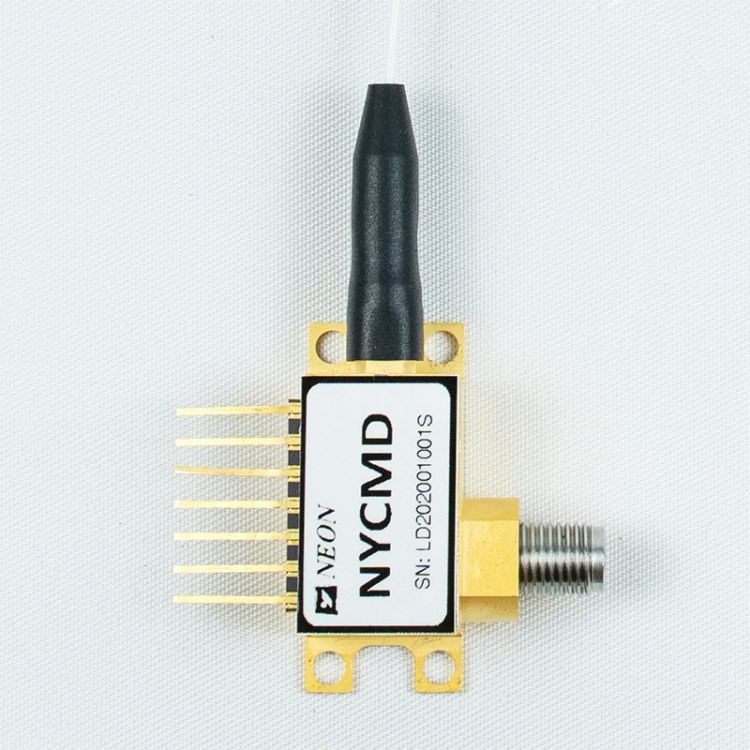
The direct modulated lasers (DML lasers) have always been the major component of the optical communication system, which is of short-reach, especially for those that are data centers and intra-board optical interconnects. They are seen as a cost-effective and easy structure, generally favored over the expensive structure of externally modulated lasers (EML lasers). Nevertheless, the frequency of the DML lasers is limited by their frequency chirp. This is because one of the chip characteristics is that the chirp increases with the modulation frequency. High chirp leads to chromatic dispersion in single-mode fibres, which in its turn results in distortion of the signal and the unattainability of high-performance long-haul transmission.
When faced with this problem, scientists went into designing new structures and new materials to lower the chirp, widen the band, and make the signal better. Over the past 20 years, great strides in technology have been made. These have created a situation that allows such a low-cost DML laser that is also very quick to be used in modern optical networks.
Early DML Development (2000s–2010s): Limitations of Conventional Lasers
In the early 2000s, DML technology was primarily employed for low-speed, short-distance applications. Conventional DML lasers used basic distributed feedback (DFB) cavities combined with simple multi-quantum well (MQW) structures. While these devices were sufficient for transmission rates up to 10 Gb/s over a few kilometers, their performance degraded rapidly at higher frequencies due to pronounced frequency chirp.
The limitations of early DML lasers were evident: signal distortion caused by chromatic dispersion restricted the use of DML lasers in longer links, and the reliance on post-compensation using digital signal processing (DSP) increased system complexity and power consumption. These challenges prompted researchers to explore material and cavity engineering as a path to reducing chirp at the source.
MQW Optimization (2010s–2018): Reducing Chirp through Material Engineering
The DML laser performance was significantly enhanced using MQW structures. The exact tuning of the quantum well thickness, material composition, and carrier distribution could let the researchers develop the gain spectrum and dynamic response as per their need for the laser. Therefore, it became possible to keep the amount of chirp at a very low and acceptable level by speeding up the operation.
Experimental studies in this period demonstrated that MQW-optimized DML lasers could achieve more stable spectral output and improved signal integrity at 10–40 Gb/s, making them suitable for short-reach intra-data-center links. This stage established that careful material engineering could directly influence DML chirp, setting the foundation for further structural enhancements.
Photonic Crystal Integration (2018–2022): Suppressing Chirp via Optical Mode Control
The breakthrough that followed immediately was the introduction of photonic crystal structures into DML designs. Photonic crystals, these being media in which the refractive index is periodically modulated, give precise control over the optical modes in the cavity. By controlling the optical mode profile as well as by confining the light effectively, that is, by using photonic crystal structures, direct modulation-induced phase variations may be prevented, and the chirp may be reduced.
In connection with MQW optimization, photonic crystal-enhanced DML lasers showed much enhanced bandwidth and a lessening of signal degradation. It was verified through lab tests that these recent constructions were performing consistently, even at higher modulation rates, thereby making a major step in low-chirp, high-speed optical transmission.
Enhanced DFB Cavity Design (2022–2026): Achieving Near-Zero Dispersion
While photonic crystal and MQW optimizations mitigated chirp, the breakthrough in achieving near-zero dispersion came from enhanced DFB cavity designs. By refining grating patterns, cavity length, and resonance modes, engineers developed DML lasers capable of producing nearly chirp-free output even at data rates exceeding 100 Gb/s.
By incorporating these enhanced DFB structures, it is possible to transmit through longer single-mode fibers without substantial chromatic dispersion, which in turn greatly decreases the necessity for compensation through DSP. Moreover, the very-low dispersion operation enhances the system energy efficiency and reliability, thus making DML lasers a promising choice for future high-speed data center interconnects.
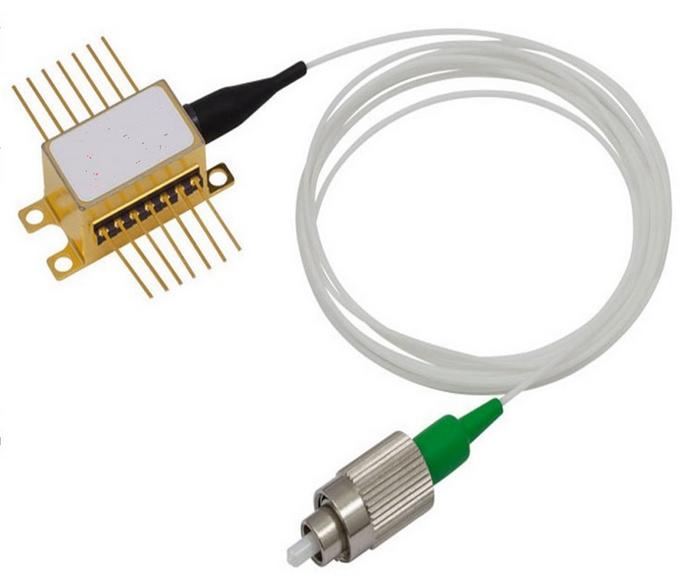
Future Trends and Applications: Low-Chirp DML in Next-Generation Optical Networks
In the future, the conjunction of MQW optimization, photonic crystal integration, and enhanced DFB cavities is a factor that will make DML lasers a really competitive technology for the next generation of optical networks. Main application trends include:
- High-Speed Data Center Interconnects – DML lasers are capable of providing 100 Gbps to 400 Gbps short-reach connections in a cost-effective and power-saving way.
- Silicon Photonics Integration – Silicon photonic platforms can be used together with low-chirp DML lasers, contributing to the creation of small, integrated optical modules.
- Advanced Optical Signal Processing – The lasers with almost zero dispersion distributed cause no dispersion in fiber optical links, and are very helpful in optical computing and neural network connections.
- Flexible Modulation Formats – The DML lasers proved to be able to handle PAM4 and other multiple modulation formats with enhanced spectral efficiency when compared to cascadable types.
It is probable that the upcoming studies will investigate the multi-cavity DML lasers, quantum-dot active regions, and the enhanced connection with photonic chips, thus pushing the DML lasers in terms of their range and speed limits.
Conclusion
The development of DML technology shows a clear trend from early devices with high chirp and minimal transmission distance towards more advanced ones utilizing MQW design, photonic crystal structures, and sophisticated DFB cavities, leading to almost no dispersion. As a result, a radical improvement in the signal integrity and bandwidth has emerged, thereby enhancing the feasibility of applying DML lasers to the present-day optical communication systems. With the growing demand for data rates and integration, low-chirp DML lasers are on their way to be the future protagonists in the world of cost-effective, high-speed optical networks and silicon photonics applications.
FAQ: DML Chirp Reduction Technologies
Q1: What is frequency chirp in a DML and why is it a problem?
A1: Frequency chirp in a directly modulated laser (DML laser) refers to the variation of the laser’s optical frequency during modulation. High DML laser chirp can cause chromatic dispersion in single-mode fibers, leading to signal distortion and limiting the maximum transmission distance. Reducing chirp is essential for maintaining high-speed optical communication performance.
Q2: How do multi-quantum well (MQW) structures help reduce DML chirp?
A2: MQW optimization enhances DML laser performance by controlling carrier redistribution and optical gain. By varying the quantum well thickness and material composition, MQW structure achieves a minimum modulation-related frequency shift to thereby reduce the DML chirp and improve the stability of the signal in high-speed optical links.
Q3: What role do photonic crystal structures play in chirp reduction?
A3: Under photonic crystal structures, which achieve optical mode control within the laser cavity, phase variations caused by direct modulation are suppressed. Along with good MQW design, a photonic crystal is a solution for chilling DML laser chirps, boosting its modulation bandwidth, and enhancing signal integrity at high-speed data rates.
Q4: How does an enhanced DFB cavity achieve near-zero dispersion in DMLs?
A4: An enhanced distributed feedback (DFB) cavity uses optimized grating patterns, cavity length, and resonance control to stabilize the laser frequency during modulation. This results in near-zero dispersion, allowing longer fiber transmission and high-speed operation (100 Gb/s+) with minimal signal distortion.
Q5: What are the future applications of low-chirp DMLs?
A5: Low-chirp DML lasers are increasingly applied in high-speed data center interconnects (100–400 Gb/s), silicon photonics modules, PAM4 and advanced modulation formats, optical computing, and neural network interconnects. Reducing chirp also minimizes reliance on DSP, improving energy efficiency and reducing overall system cost.