
Technical Evolution and Market Application of DFB DML Laser Modules
The global optical communication market in 2026 is characterized by a transition toward higher frequency bands and lower power consumption. As data centers migrate to 800G and 1.6T architectures and 6G terrestrial-satellite integrated networks begin experimental deployment, the demand for high-performance light sources has intensified. At the center of this technological shift is the DFB laser, specifically when utilized as a directly modulated laser (DML). This article provides a technical analysis of how the integration of these components into a robust laser diode module is redefining the performance boundaries of modern optical links.
The Core Architecture: Understanding the DFB Laser
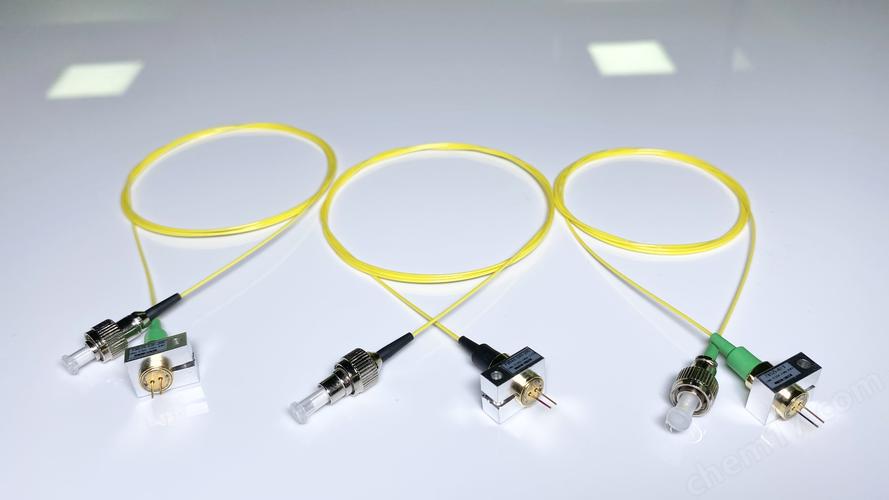
A DFB (Distributed Feedback) laser is a type of laser diode where the active region of the device contains a periodically structured element or diffraction grating. This grating provides optical feedback for the laser, which acts as a 1D photonic crystal and forces lasing on a single longitudinal mode. In contradistinction to the Fabry-Perot (FP) lasers that have multiple peaks in the output spectrum, the DFB laser ensures a high Side Mode Suppression Ratio (SMSR), usually surpassing 40 dB.
The stability of the emission wavelength is governed by the Bragg wavelength, defined by the equation:
λB=2neffΛ
where neff is the effective refractive index, and Λ is the grating period. Ensuring such stability is the issue when assisted with high-speed signals due to their transformation. For example, in DWDM systems, each fringe frequency drift can cause other sources to interfere with one another. In 2026, a latest beneficiary has been the built-in gain-coupled model contained in the DFB laser design, which lessens the sensitivity of the laser cavity due to the coupled reflections externally and thus minimizes the necessity of the optical isolator’s volume for its typical short-haul designs.
The Mechanism of the Directly Modulated Laser (DML)
A directly modulated laser operates by varying the injection current into the laser diode active area to represent the digital “1” and “0” or the variations in an analog signal. This method is distinct from external modulation, where a continuous wave (CW) laser is followed by a separate modulator such as an Electro-absorption Modulator (EML) or a Mach-Zehnder Modulator (MZM).
Overcoming Frequency Chirp and Bandwidth Limitations
Historically, the DML laser was limited by two factors: frequency chirp and relaxation oscillation frequency. Frequency chirp occurs because the change in carrier density required for modulation also changes the refractive index of the semiconductor material, causing a rapid shift in the output frequency (wavelength). This leads to spectral broadening, which, when combined with the chromatic dispersion of standard single-mode fiber (G.652), limits the transmission distance.
However, the current generation of DML lasers has overcome these barriers through:
- Engineering of Quantum Wells: By adjusting the stresses and widths of the multiple quantum well (MQW), the gain bandwidth has been increased, which moves the relaxation oscillation frequency beyond 18GHz.
- High Dynamic Range (HDR) Optimization: It can be used for analog RFoF systems because high SFDR and high EOM drive are presently available in Telecom QKD transmitters.
- Low Threshold Current: Lowering the current to a value of under 10mA eliminates internal heat generation, enabling the laser to modulate at high temperatures without any notable effect on the extinction ratio.
Integration into the Laser Diode Module
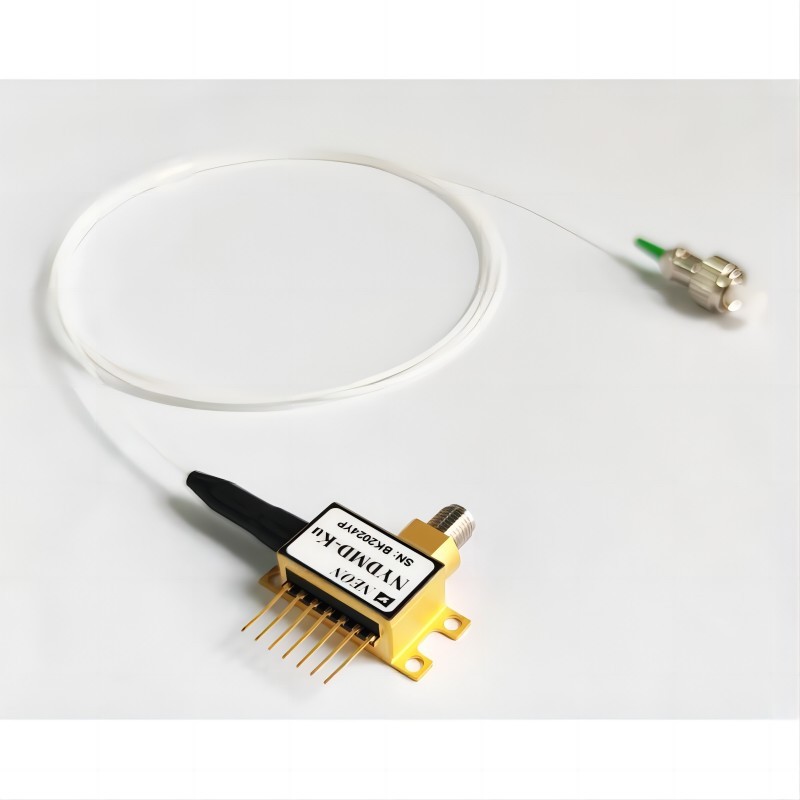
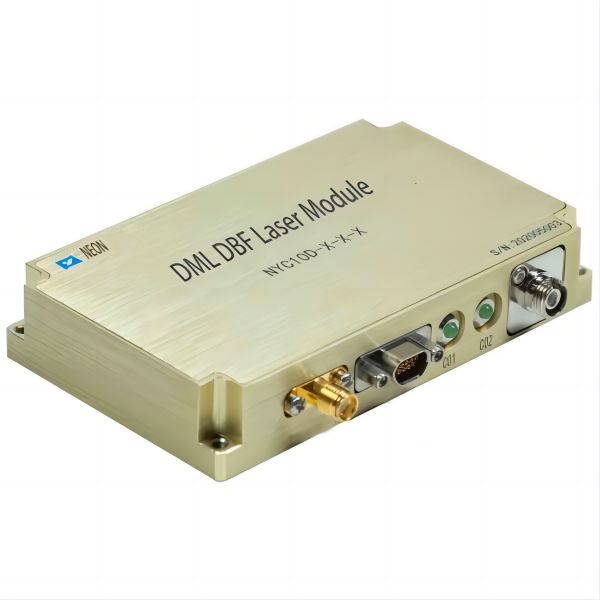
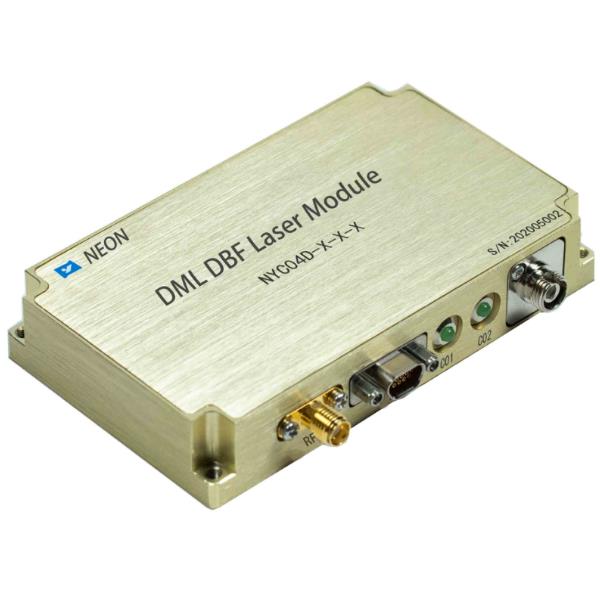
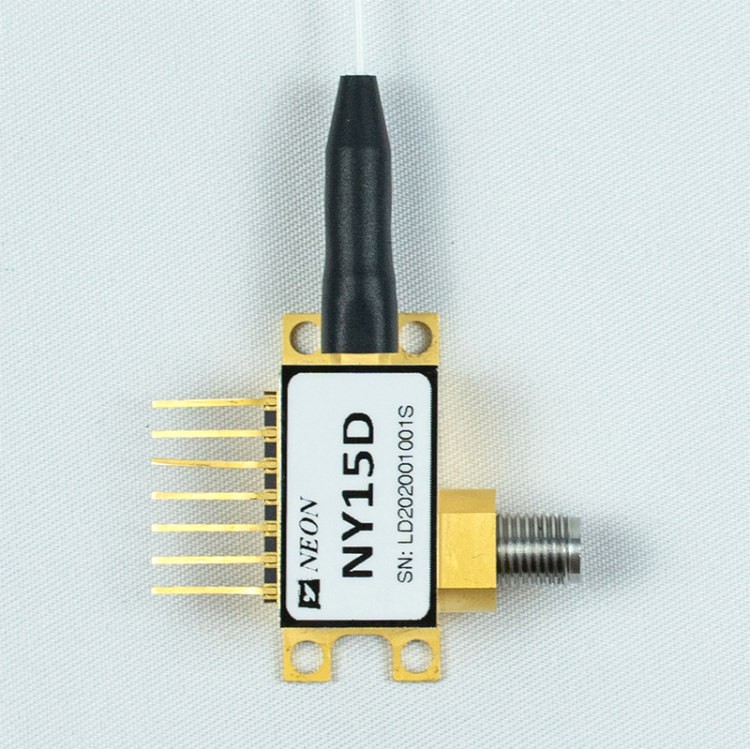
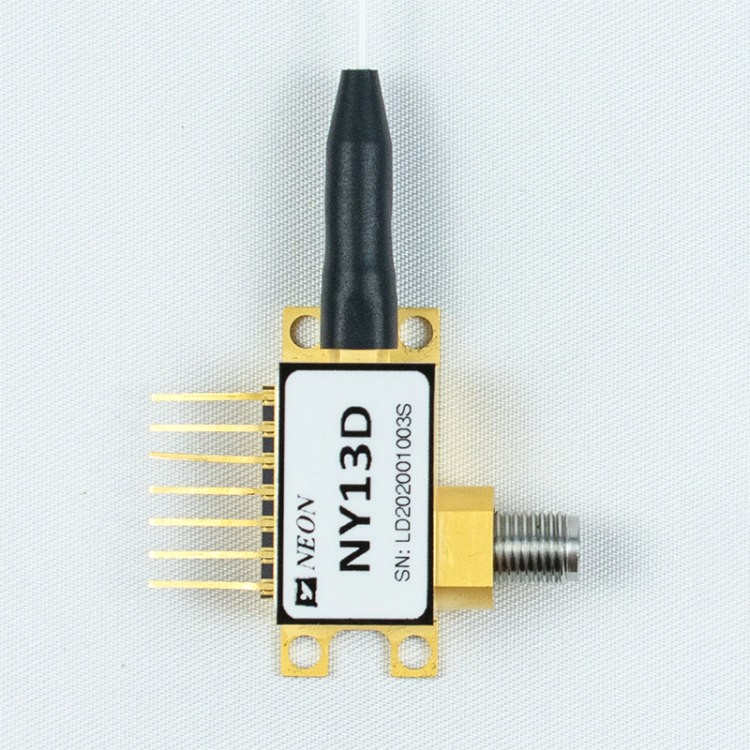
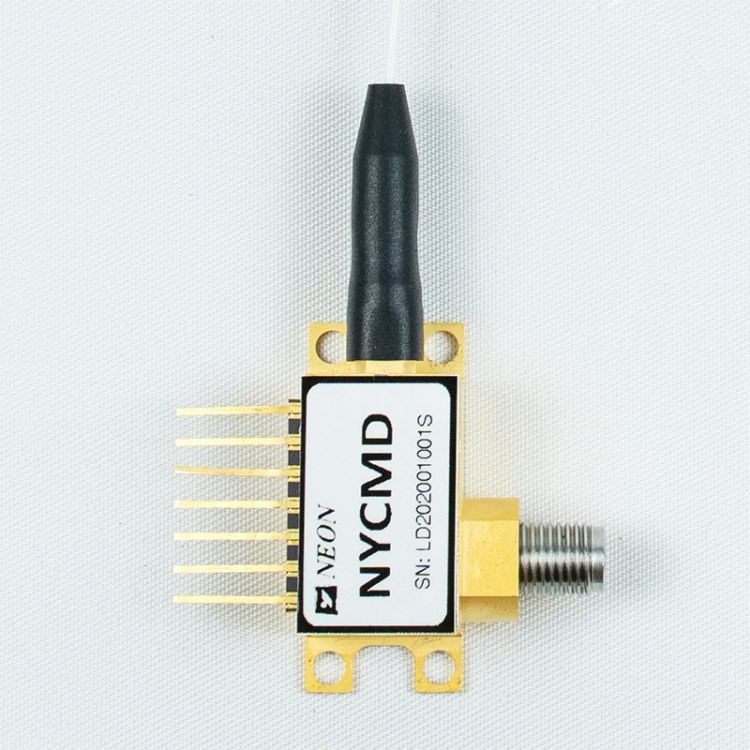
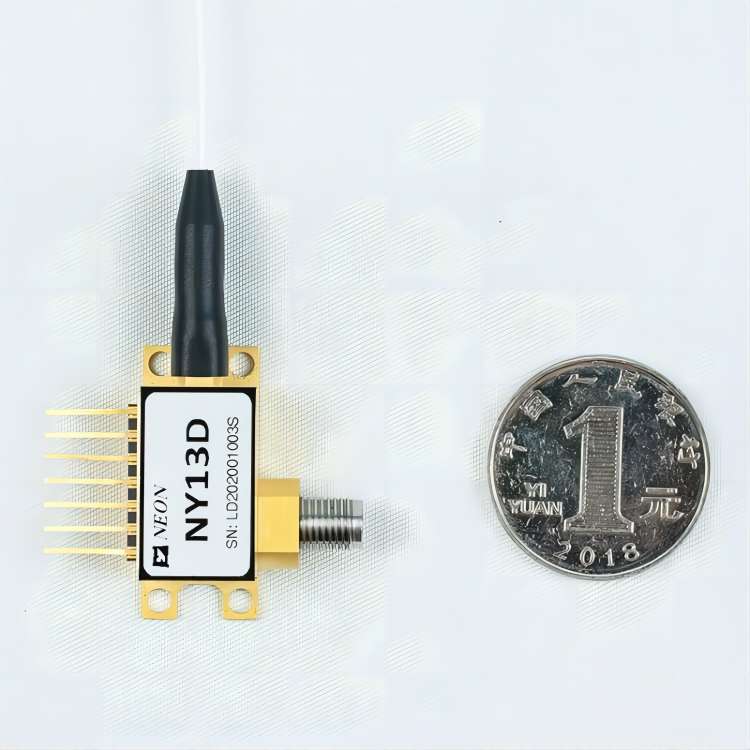
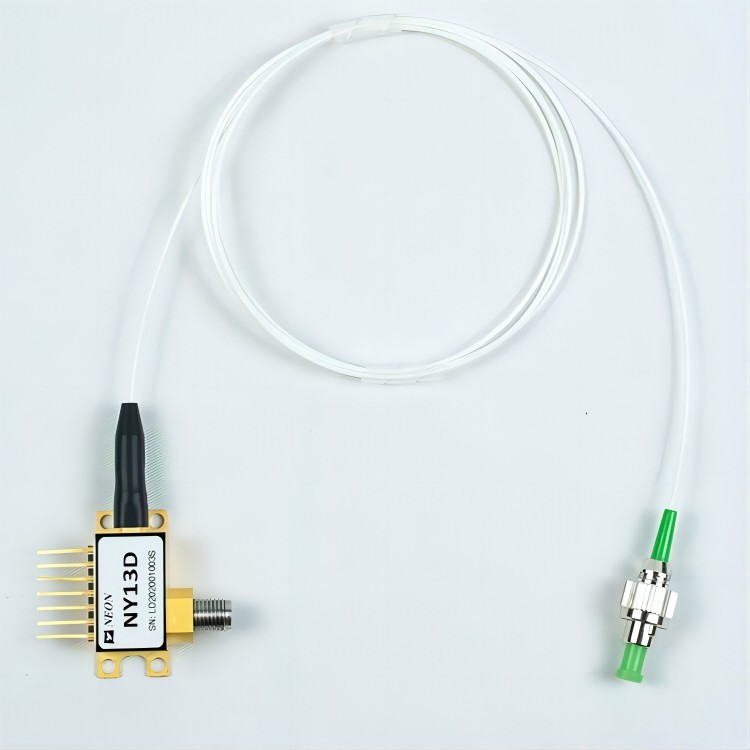
Clearly, the progression of the semiconductor chip to the point when it is incorporated into the operational and already functioning system is transformed within the laser diode module. This device is responsible for creating the connections needed for the operation of the DFB lasers.
1. Electrical and Thermal Management
At frequencies of 12GHz to 18GHz, electrical impedance matching becomes a primary concern. The laser diode module must include a 50-ohm termination and a butterfly or TO-can package designed for high-speed signal integrity. Any impedance mismatch results in signal reflections, which manifest as “ringing” in digital eye diagrams or harmonic distortion in analog signals.
The heat stresses are dealt with using a thermoelectric cooler (TEC) integrated with a thermistor. Given that the output wavelength of a distributed feedback (DFB) laser shifts about 0.1 nm per degree Celsius, the temperature should be constrained in order to strap the laser to distinct ITU grid frequencies. In situations that are not cooling dependent, special “Receptacle” modules are employed with materials of high thermal transfer properties to not dissipate cold actively.
2. Optical Coupling
The module is designed with a lensed fiber or an aspheric lens in order to effectively transmit light output to the fiber position. Such high coupling efficiency (more than 50%) is noticeably important in 2026 for direct modulated laser applications to preserve 10dBm to 13dBm output power, enough for 10km to 20km spans.
Market Applications and Industrial Impact
The convergence of these technologies supports several high-growth sectors in 2026:
1. Radio over Fiber (RFoF) and 6G Infrastructure
In 6G networks, the use of sub-THz frequencies requires massive MIMO antenna arrays. Processing these signals at the antenna head is power-intensive. By using a high-speed directly modulated laser, the raw RF signal can be converted to an optical signal and transmitted to a centralized baseband unit (BBU). This “Antenna Remoting” reduces the weight and power requirements of the cell site.
2. Linear Drive Pluggable Optics (LPO)
The AI-driven demand for low-latency networking has led to the adoption of LPO. LPO modules remove the Digital Signal Processor (DSP) from the optical transceiver to save power. This architectural change places the burden of signal integrity entirely on the laser. A high-linearity DFB laser is the only viable component that can meet the strict Bit Error Rate (BER) requirements of LPO without electronic compensation.
3. Satellite Tracking, Telemetry, and Control (TT&C)
Ground stations for LEO satellite constellations require high-frequency analog links to transmit tracking data. The use of a laser diode module with an 18GHz bandwidth allows for the direct transmission of K-band and Ka-band signals over fiber, bypassing the need for complex down-conversion electronics at the dish.
Comparative Analysis: DML vs. EML
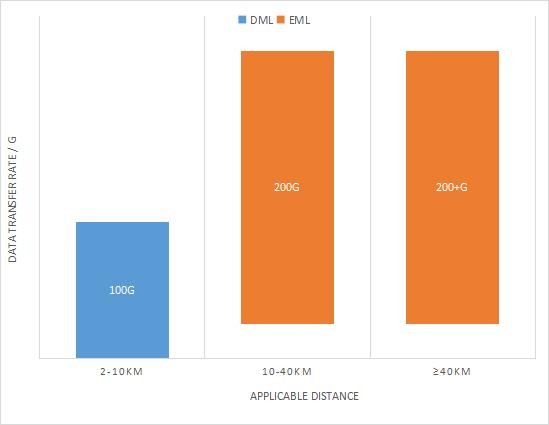
While EML lasers remain the standard for long-haul transmission (40km – 80km) due to their near-zero chirp, the DML is displacing EML lasers in the 2km to 20km range. The table below summarizes the technical trade-offs:
| Parameter | Directly Modulated Laser (DML) | Electro-absorption Modulated Laser (EML) |
| Complexity | Low (Single Chip) | High (Integrated Modulator) |
| Power Consumption | Low (< 0.5W) | High (> 1.5W) |
| Chirp | High | Low |
| Bandwidth | 10GHz – 25GHz | 25GHz – 60GHz+ |
| BOM Cost | Low | High |
| Best Use Case | Data Center, RFoF, LPO | Metro, Long-Haul, Coherent |
The evolution of the DFB laser from a specialized telecommunications component to a high-speed, general-purpose directly modulated laser is a result of precise semiconductor engineering and advanced module packaging. By addressing the physical constraints of carrier dynamics and thermal stability, the modern laser diode module now provides a cost-effective, low-power solution for the most demanding high-frequency applications of 2026. As the industry moves toward 1.6T speeds and integrated satellite-terrestrial networks, the DML will remain a fundamental building block of the global optical infrastructure.