
1650nm InGaAs Photodetectors: Applications in High-Precision Gas Monitoring and Deep Medical Imaging
For the last few decades, most optoelectronic technologies have focused on the traditional telecommunications windows at 1310 nm and 1550 nm. These wavelengths made global fiber networks possible and sped up the growth of high-speed photodetection. But as industrial sensing and biomedical imaging need more sensitivity, deeper penetration, and wider spectral selectivity, the industry is moving toward more specialized near-infrared (NIR) windows.
The 1650 nm wavelength (λ = 1650 nm) has become more and more important among these new bands. The development of 12 GHz and 18 GHz InGaAs photodetectors has made it possible to detect things at this wavelength very quickly and with great sensitivity. This is a key part of new gas sensing and medical imaging platforms.
The 1650 nm InGaAs photodetector is no longer just a niche part; it is now a key part of advanced sensing architectures, from TDLAS methane detection systems to swept-source optical coherence tomography (SS-OCT).
Technical Deep Dive: Why 1650 nm?
The ascendancy of 1650nm is not accidental; it is rooted in unique physical properties that offer distinct advantages over shorter wavelengths.
1. Unique Physical Advantages
Lower Rayleigh Scattering, Greater Penetration
The intensity of Rayleigh scattering is inversely proportional to λ⁴. When the wavelength gets longer, the scattering goes down a lot. The 1650 nm band scatters less in biological tissue and atmospheric media than the 1310 nm band does. This means that:
- Improved imaging depth in dermal tissue
- Higher stability in long-path gas detection
- Reduced signal distortion in particulate environments
This physical advantage makes 1650nm especially attractive for deep medical imaging and long-distance industrial sensing.
Spectral Cleanliness
The 1650nm range has a relatively clear atmospheric transmission window because water vapor (H₂O) and carbon dioxide (CO₂) don’t absorb too much of it. This spectral isolation makes the signal-to-noise ratio (SNR) better in gas detection systems that use absorption.
2. Material Compatibility: Why InGaAs?
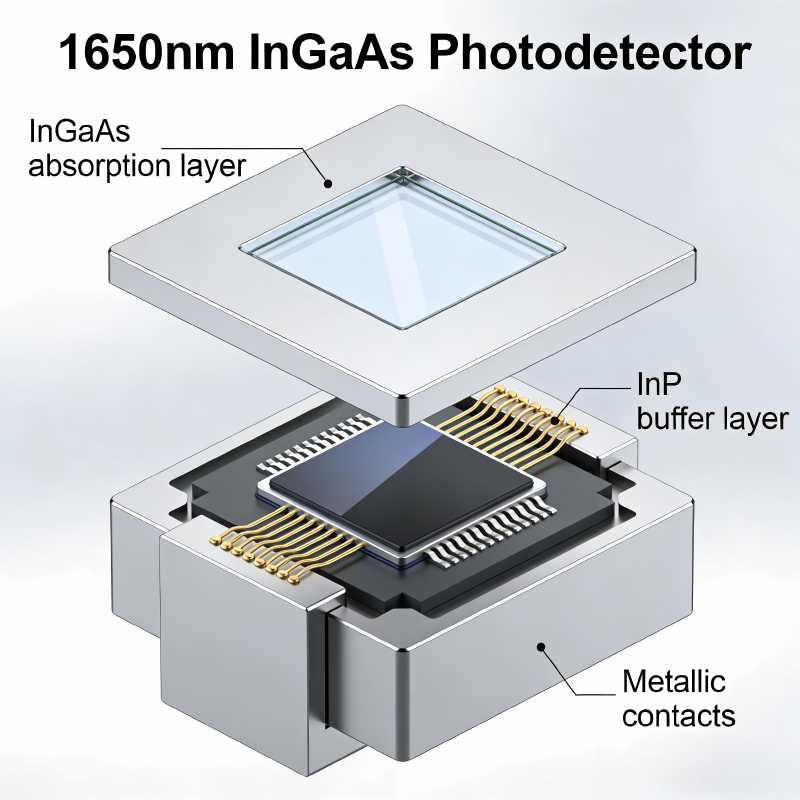
Indium Gallium Arsenide (InGaAs) is ideally suited for photodetection in the 900–1700 nm range.
High Quantum Efficiency (QE)
At λ = 1650nm, advanced InGaAs photodiodes demonstrate high responsivity (R), often exceeding 0.8 A/W depending on device structure. This high QE ensures strong electrical conversion even for weak optical signals.
Dark Current Control via Deep Mesa Design
Longer wavelengths usually mean more thermal noise and dark current. Modern deep mesa structures and better epitaxial growth methods cut down on surface leakage currents by a lot, which makes:
- Lower noise-equivalent power (NEP)
- Improved detectivity (D*)
- Stable performance at elevated temperatures
These advancements allow 12 GHz and 18 GHz InGaAs photodetectors to operate reliably in demanding field environments.
Core Application I: High-Precision Gas Sensing
The 1650nm wavelength is often referred to as the “Gold Standard” for methane (CH4) monitoring.
1. Methane Detection: The Gold Standard at 1650 nm
One of the strongest absorption lines of methane (CH₄) occurs near 1650 nm, making this wavelength ideal for Tunable Diode Laser Absorption Spectroscopy (TDLAS) methane detection.
TDLAS + High-Speed Detection
In TDLAS systems, a tunable laser scans across a specific absorption line. A 12 GHz InGaAs photodetector enables:
- Microsecond-scale transient gas measurements
- Real-time spectral acquisition
- High-frequency modulation techniques
The high bandwidth (f = 12 GHz or 18 GHz) ensures faithful reproduction of modulated optical signals, which is critical for harmonic detection techniques.
Second Harmonic (2f) Detection
Engineers can greatly improve SNR by changing the laser’s wavelength and taking out the second harmonic signal. The strong methane absorption peak at 1650 nm makes sensitivity higher, which lets:
- ppm-level methane detection
- Rapid leak localization
- Reduced false positives
2. Industrial Applications in the Carbon-Neutral Era
As global carbon reduction policies tighten, methane monitoring has become mandatory in oil & gas, landfills, and pipeline infrastructure.
Lightweight fiber-coupled 1650 nm InGaAs photodetector modules are now integrated into:
- Drone-based leak inspection systems
- Fixed industrial safety monitors
- Portable handheld analyzers
High-speed detectors improve dynamic response, making them compliant with stringent environmental monitoring standards.
Core Application II: Next-Generation Medical Imaging
In the medical field, the shift to 1650nm is revolutionizing how we visualize the human body without invasive procedures.
1. Swept-Source OCT (SS-OCT): A Performance Leap
Optical Coherence Tomography relies on broadband or swept light sources and high-speed photodetection.
At 1650 nm:
- Tissue scattering is reduced
- Imaging depth increases
- Contrast in deeper dermal layers improves
An 18 GHz InGaAs photodetector paired with ultra-fast swept lasers enables:
- High A-scan rates
- Real-time 3D volumetric imaging
- Reduced motion artifacts
In dermatology, 1650 nm improves visualization of dermal structures. In dentistry, it enhances early-stage caries detection beyond enamel surfaces.
2. Toward Non-Invasive Glucose Monitoring
Emerging research explores glucose-specific spectral features in the 1600–1700 nm range. While still in development, high-bandwidth InGaAs photodetectors provide:
- Fast spectral sampling
- Improved signal fidelity
- Compatibility with compact wearable platforms
If successful, this approach could redefine metabolic monitoring through optical spectroscopy.
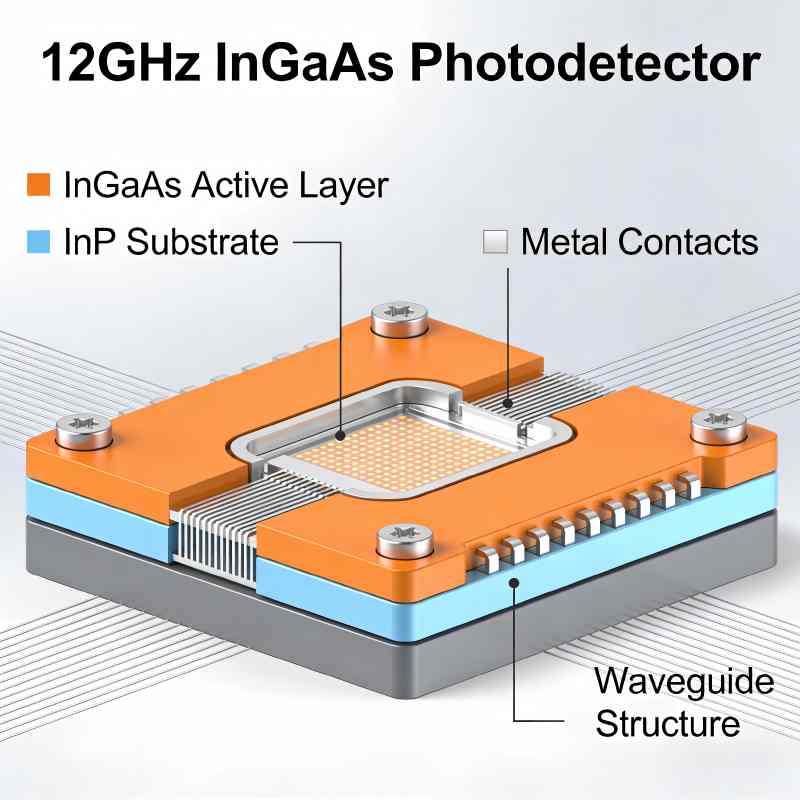
Hardware Evolution: The Role of 12GHz and 18GHz Detectors
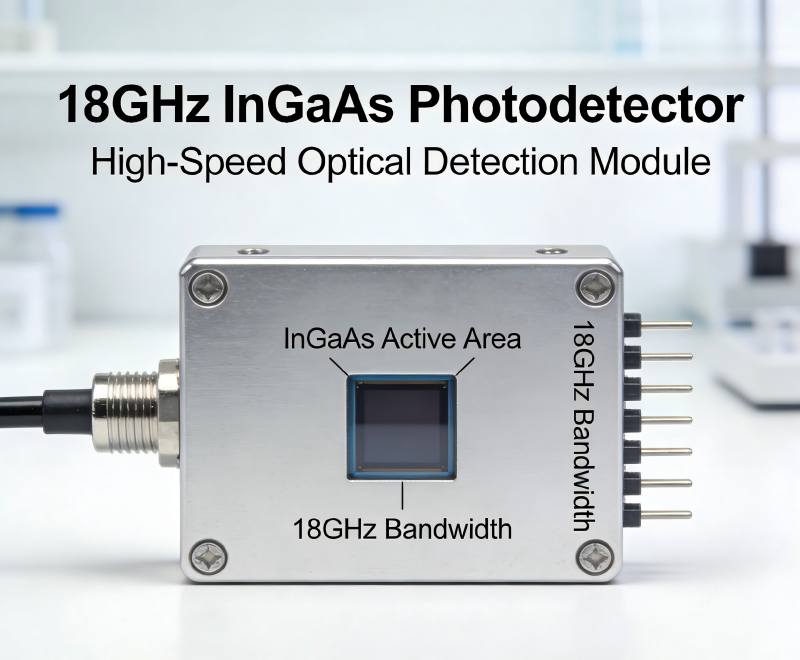
The jump from standard detectors to high-speed 12GHz and 18GHz variants requires sophisticated engineering in packaging and signal integrity.
1. Packaging and Integration
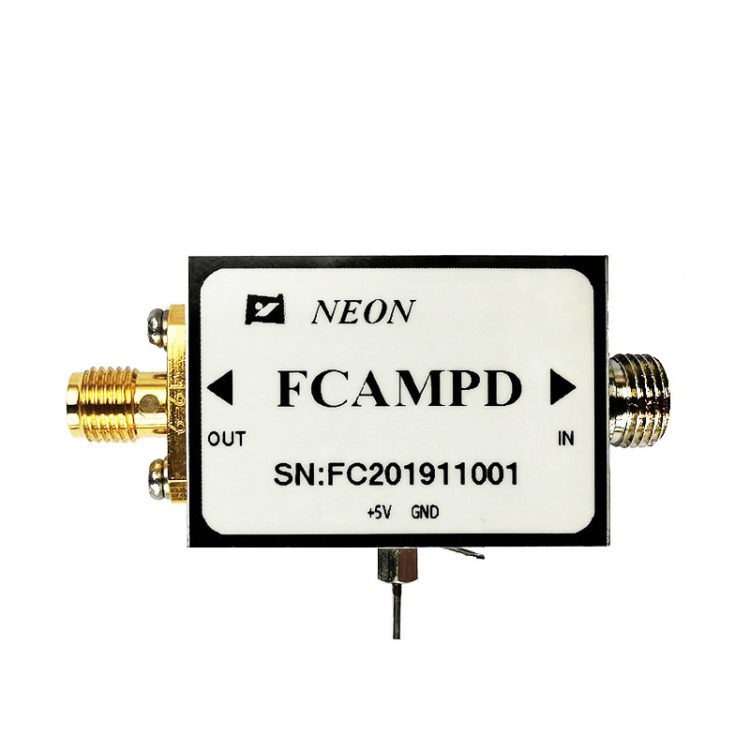
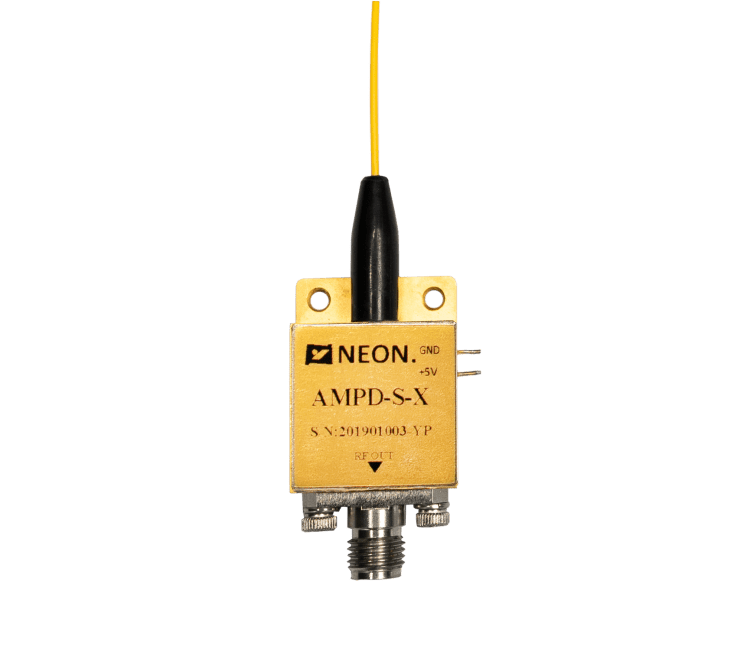
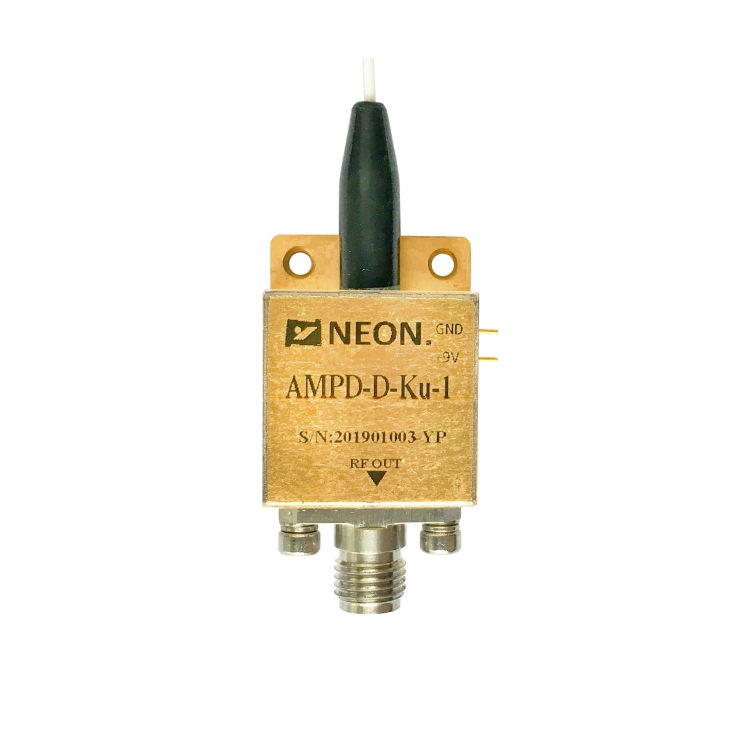
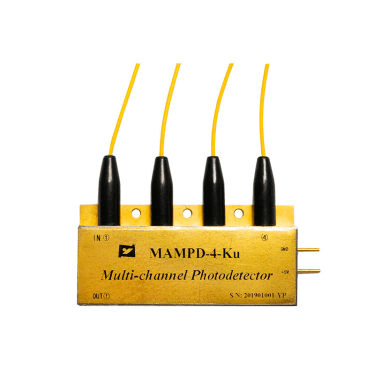
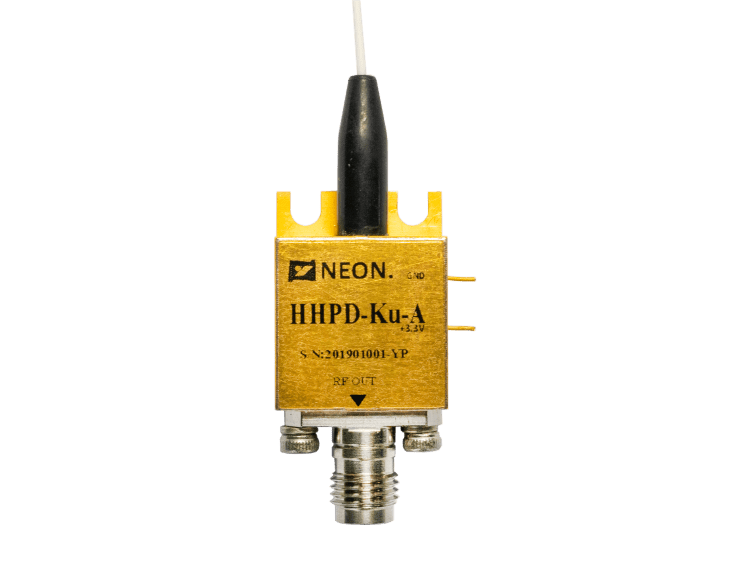
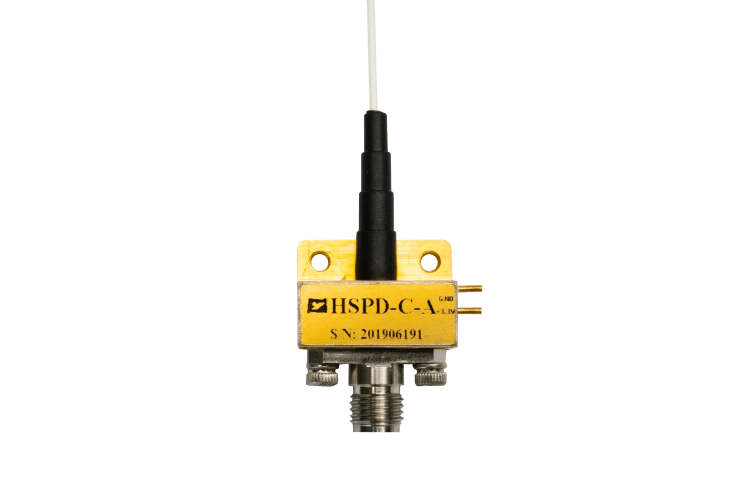
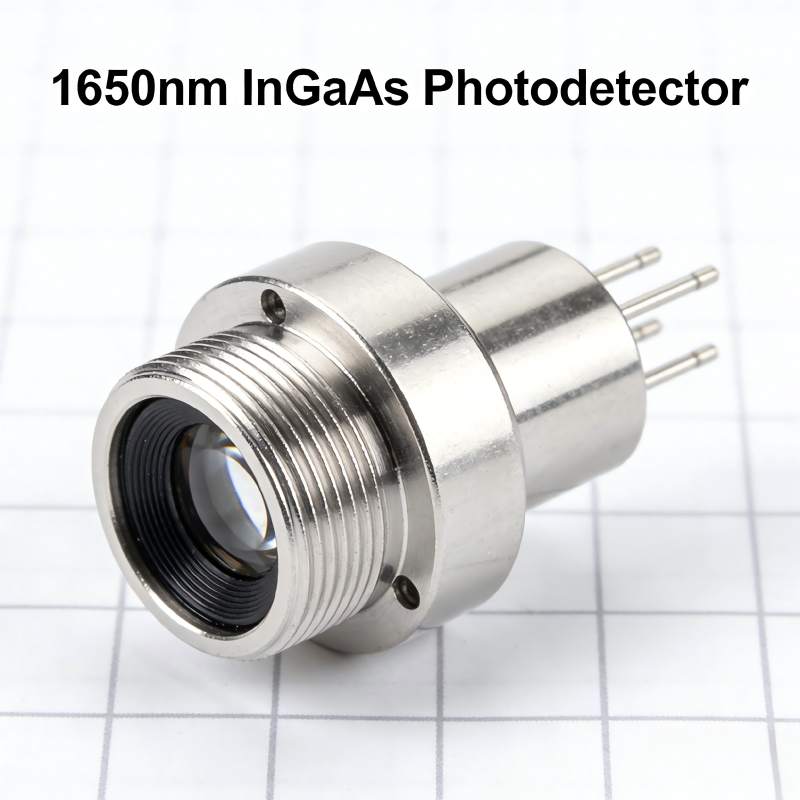
These detectors often have Bias-T parts built in to help with impedance matching so that RF (radio frequency) output is stable. As frequencies rise, the industry is moving away from traditional TO-Can packages and toward Butterfly Packages or fiber-coupled modules. These are better at keeping signal quality high at GHz ranges.
2. Performance Comparison
The choice between 12GHz and 18GHz hardware depends largely on the required temporal resolution.
| Parameter | 12 GHz InGaAs Photodetector | 18 GHz InGaAs Photodetector |
| Bandwidth (f) | 12 GHz | 18 GHz |
| Rise Time | ~30 ps | ~20 ps |
| Jitter | Lower | Ultra-low |
| Power Consumption | Moderate | Higher |
| Typical Applications | TDLAS gas sensing | SS-OCT, ultra-fast spectroscopy |
| Cost | More economical | Premium |
Trends Toward 2026 and Beyond
As we look toward the end of the decade, two major trends are shaping the future of 1650nm technology:
- Heterogeneous Integration: There is a growing push to put InGaAs photodetectors directly on Silicon Photonics (SiPh) platforms. This makes it possible to make sensing chips that are smaller, cheaper, and can be made in large quantities.
- Intelligence at the Edge: The future involves Edge AI chips processing the high-frequency spectral data directly at the detector level. This reduces the need for massive data transfer and allows for “smart” sensors that can identify gases or tissue anomalies autonomously.
The 1650nm waveband is a key area of research in optoelectronics. Industries can now monitor gases and make medical diagnoses with a level of accuracy that was not possible before by using fast InGaAs photodetectors. As we get closer to 2026, the combination of high-bandwidth hardware and smart processing will make 1650nm the “gold standard” for high-performance sensing.