
Photodetectors in Optical Fiber Communication: OFC 2026 Technical Review
The 2026 Optical Fiber Communication Conference (OFC 2026) in Los Angeles has established a clear technical trajectory for the next generation of optical networks. Artificial Intelligence (AI) training clusters use photodetector (PD) systems to handle data between 800G and 1.6T while testing 3.2T systems. The primary technical requirement for 2026 is achieving a balance between high bandwidth, high responsivity, and low manufacturing costs through semiconductor integration. This article analyzes the specific advancements in photodetector materials, integration methodologies, and architectural shifts presented at OFC 2026.
Core Breakthroughs in Material Science and Physical Mechanisms
The fundamental performance of a photodetector is governed by its material properties, specifically the absorption coefficient and carrier mobility. In 2026, the industry is moving beyond standard PIN structures toward advanced physical mechanisms.
1. Optimization of InGaAs/InP Heterostructures
Indium Gallium Arsenide (InGaAs) remains the standard material for the C-band (1550 nm) and L-band due to its high responsivity. At OFC 2026, research focused on the Uni-Traveling Carrier Photodetector (UTC-PD). By using only electrons as active carriers, the device overcomes the slow hole-transport limitation. Current designs achieve 3 dB bandwidths exceeding 120 GHz. To maintain responsivity while reducing the absorption layer thickness (which is necessary for speed), manufacturers are implementing integrated optical concentrators and resonant cavity structures to increase the effective optical path length.
2. GHz-Scale Thermal Metasurface Detectors
A significant technical highlight in March 2026 is the development of ultra-fast thermal detectors. Traditional thermal detectors operate in the millisecond range. New devices utilizing plasmonic metasurfaces can concentrate electromagnetic energy into nanoscale volumes, triggering a thermoelectric response within 125 picoseconds. This allows for a 2.8 GHz bandwidth. While lower than UTC-PDs, these devices offer a “flat” response across an extremely wide spectral range, providing a solution for multi-band power monitoring and satellite-to-ground optical links where standard semiconductors fail to cover the entire spectrum.
3. Integration of 2D Materials
Graphene and Transition Metal Dichalcogenides (TMDCs) are being integrated into silicon-on-insulator (SOI) waveguides. The advantage of 2D materials in 2026 is their ability to be transferred onto processed CMOS wafers without lattice mismatch constraints. Experimental data presented at the conference indicate that graphene-silicon Schottky junction detectors can reach internal quantum efficiencies near 90% when combined with micro-ring resonators.
Silicon Photonics (SiPh) and Heterogeneous Integration Strategies
Silicon photonics has shifted from a niche technology to the dominant platform for high-volume optical interconnects. The integration of the photodetector onto the silicon substrate is the primary focus for reducing packaging complexity.
1. Heterogeneous Wafer Bonding
Silicon itself is transparent at 1550 nm and cannot detect communication-grade light effectively. OFC 2026 reports show that Heterogeneous Integration—the process of bonding III-V material thin films (like InGaAs) onto a silicon-on-insulator (SOI) wafer—is now a mature mass-production process. This allows the laser, modulator, and detector to reside on a single chip. Key improvements in 2026 include reduced dark current through better buffer layer growth, typically maintained below 10 nA for a 10 μm diameter device.
2. High-Density Photodetector Arrays
For 1.6T transceivers, the industry uses 8-channel or 16-channel arrays. The challenge is Electrical Crosstalk and Optical Coupling Loss. Current designs utilize “Vertical Coupling” via grating couplers or “Edge Coupling” via spot-size converters. High-density arrays in 2026 prioritize a pitch of 250 μm or less to align with standard ribbon fibers while maintaining a high Signal-to-Noise Ratio (SNR).
| Parameter | 2024 Industry Standard | OFC 2026 Target |
| Data Rate per Channel | 100 Gbps (PAM4) | 200 / 400 Gbps |
| 3dB Bandwidth | 50-60 GHz | 90-110 GHz |
| Responsivity (A/W) | 0.6 – 0.8 | 0.85 – 0.95 |
| Dark Current | < 50 nA | < 10 nA |
Architectural Shifts Driven by AI Data Centers
The architecture of the optical receiver is changing to meet the power efficiency requirements of AI workloads.
1. Linear Drive Pluggable Optics (LPO) and LRO
A major trend at OFC 2026 is the removal of the Digital Signal Processor (DSP) in the optical module to reduce power consumption and latency. This is known as LPO (Linear Drive Pluggable Optics). In this architecture, the photodetector must have extremely high linearity. If the photodetector output is non-linear, the signal cannot be recovered by the host-side ASIC. Consequently, photodetectors in 2026 are being optimized for high power handling capabilities (high IP3 points) to prevent saturation during high-intensity signal peaks in PAM4 modulation.
2. Coherent Detection in Short-Reach Links
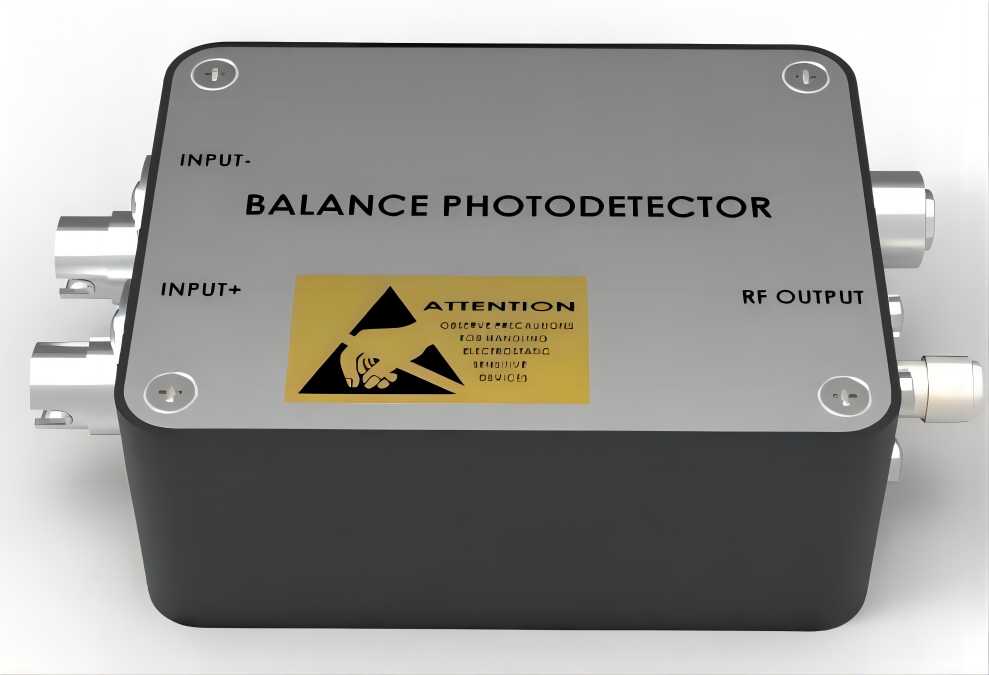
The coherent detection system employs a local oscillator together with a balanced photodetector system. In 2026, data centers will begin using coherent technology through the implementation of ZR ZR modules. Balanced Photodetectors BPD now exist as part of silicon photonics circuits because they offer advanced sensitivity combined with noise rejection abilities that exceed 20 dB Common Mode Rejection Ratio. The system enables transmission of data at increased speeds across extended distances, which extend throughout the campus area without needing costly optical amplifiers.
Specialized Applications: Microwave Photonics and LiDAR
The technological spillover from optical communication photodetectors is impacting other industries.
- Microwave Photonics: In order to transmit optical information over 6G wireless for backhaul, a variety of high-speed photodetectors are used to convert this information to microwave or RF signals. In 2026, the particular emphasis is to be placed on High-Power PDs that can deliver sufficient power to trigger an antenna without a second electronic source.
- LiDAR Technology: Frequency Modulated Continuous Wave (FMCW) LiDAR likewise needs high-speed balanced photodetectors to monitor the double frequency of the reflected light. The three-dimensional integration techniques adopted for 1.6T communication are being explored for automotive LiDAR so as to achieve similar compaction of components whilst maintaining or improving range resolution.
Supply Chain and Market Outlook (2026-2030)
The foundry model for optical components has solidified. GlobalFoundries, Tower Semiconductor, and specialized III-V foundries are offering standardized Process Design Kits (PDKs) for photodetectors.
Supply Chain Observations:
- Acquisition Trends: Large companies in the semiconductor sector have picked up bright young optical interconnection firms to protect patented technology associated with silicon-based photo detector monoliths.
- Geopolitical Diversification: There is increasingly more InGaAs production, including epitaxial films in Southeast Asia and Europe, to make the supply chain more resilient.
- Cost Reduction: The shift to 12-inch (300mm) silicon photonic wafers by the end of 2027 is anticipated to decrease the unit cost of integrated photodetectors for the market players by 30%.
OFC 2026 demonstrates that the photodetector is no longer a discrete component but an integrated element within a complex Photonic Integrated Circuit (PIC). The transition to 1.6T and 3.2T systems requires a move toward UTC-PD structures, heterogeneous integration on silicon, and high-linearity designs for DSP-free architectures. These technical advancements are essential for sustaining the bandwidth requirements of the global AI infrastructure.