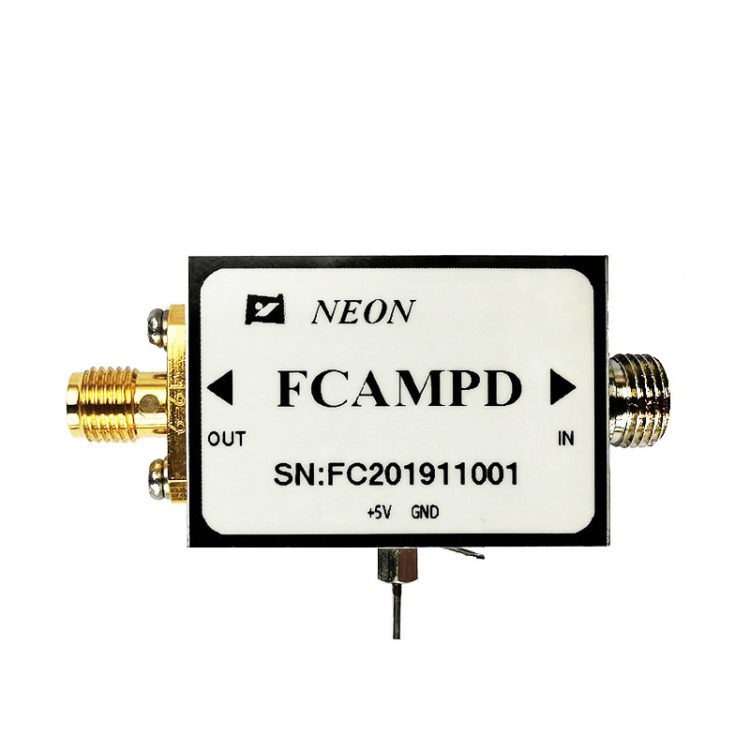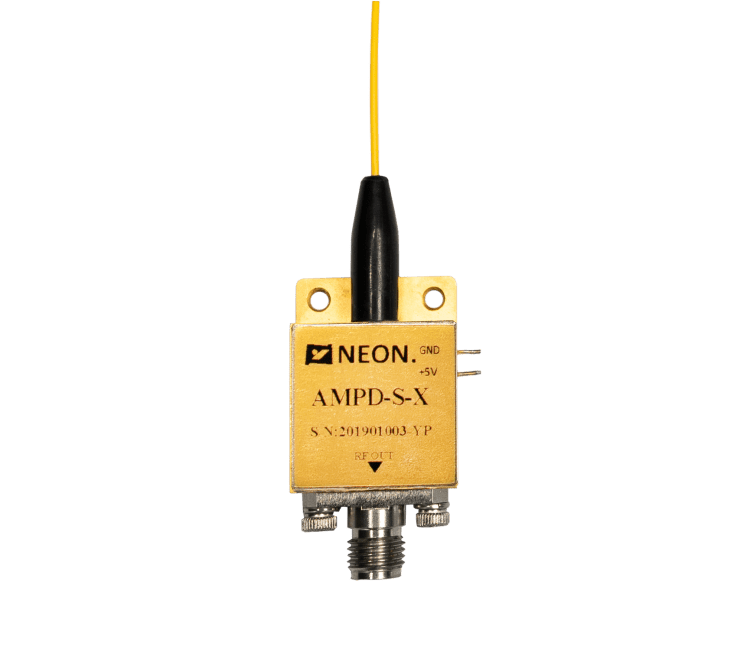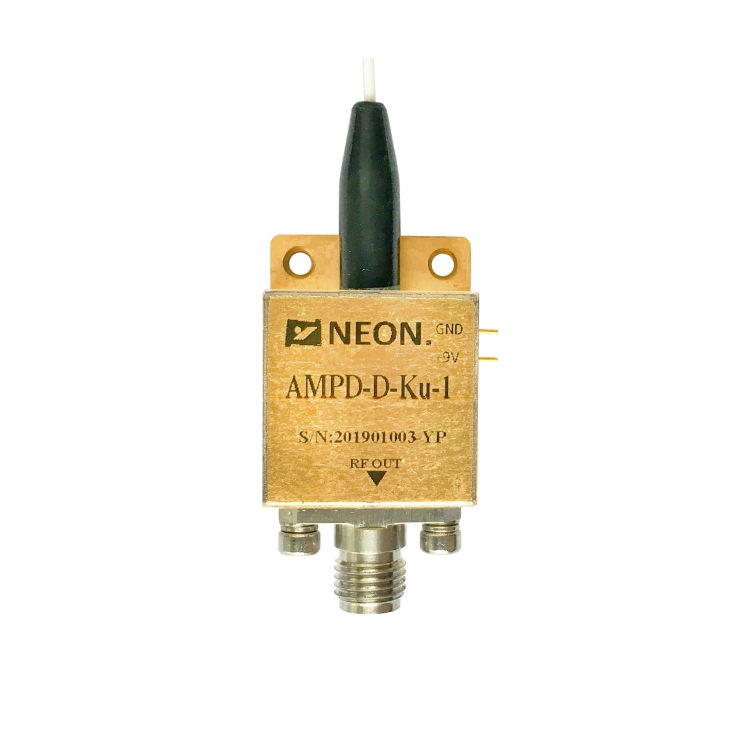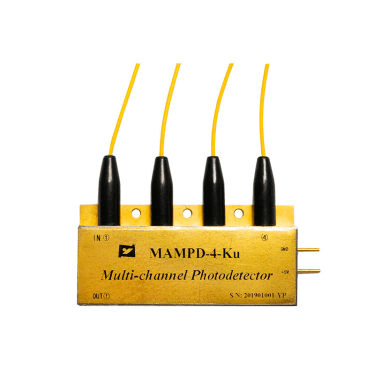

Balanced Photodetector Explained: CMRR, Circuit Design & Applications
An important factor in maintaining high levels of accuracy in high-speed optical communication, coherent detection, and advanced sensing systems is not just amplification but rejection of noise. One of the key factors that enable ultra-low-noise optical detection is balanced photodetector.
Coherent receivers, FMCW LiDAR, and interferometry have been using balanced photodetectors, which provide good laser intensity noise suppression and increased SNR. It is a very particular key aspect of them – balanced photodetector common mode rejection ratio (CMRR).
This article explains how balanced photodetectors work, why CMRR matters, and how modern balanced photodetector circuit architectures are pushing performance beyond traditional limits.
What Is a Balanced Photodetector?
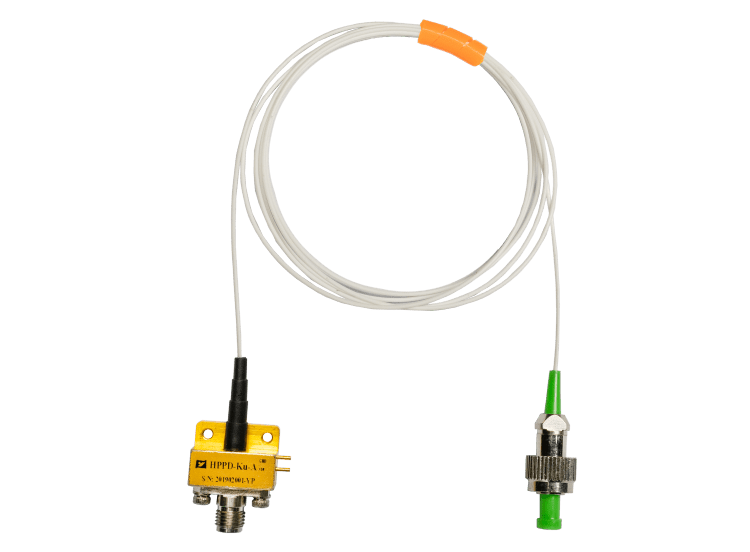
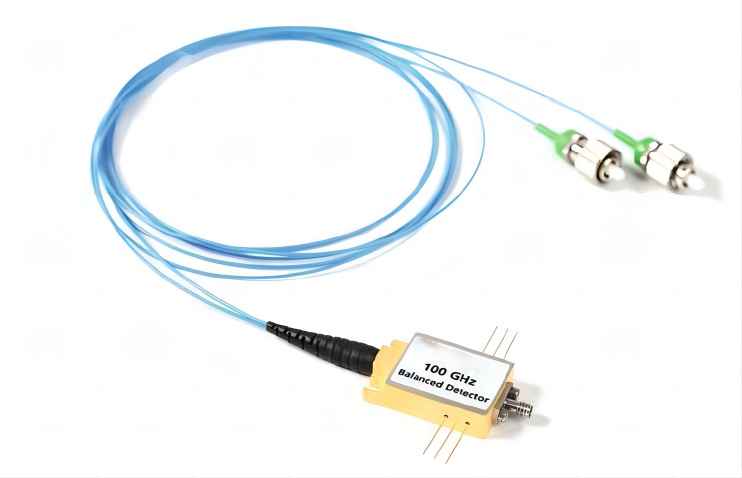
A balanced photodetector employs two optical inputs and transforms these optical signals into electrical ones, the difference of which is finally monitored. Here, it does not detect the absolute optical power, but rather the difference of two signals, which are usually a signal arm and a reference or local oscillator (LO).
This differential detection offers several advantages:
- Suppression of laser relative intensity noise (RIN)
- Rejection of common-mode electrical noise
- Improved sensitivity for weak optical signals
- Higher dynamic range in coherent detection systems
Balanced photodetectors are commonly used in coherent optical receivers, optical interferometers, quantum optics experiments, and high-resolution LiDAR systems.
Why Common Mode Rejection Ratio (CMRR) Is Critical
The balanced photodetector common mode rejection ratio quantifies how well the detector suppresses noise that appears equally on both inputs.
In designed circuits, laser power is often the dominating noise source, especially in the presence of environmental noise. Increased CMRR, therefore, eliminates undesired signals so that system distortion remains minimum.
Typical CMRR Ranges:
- 30–40 dB: Standard commercial balanced photodetectors
- 45–50 dB: High-quality integrated solutions
- 60 dB: Advanced architectures with specialized circuit or optical designs
Every 20 dB increase in CMRR corresponds to approximately a 100× improvement in signal-to-noise ratio, making CMRR a defining factor in long-range or high-precision optical systems.
Limitations of Traditional Balanced Photodetector Circuits
The use of two separate photodiodes connected to a transimpedance amplifier in balanced detectors is a standard technique. However, in order for cancellation to be optimal, close matching between these two photodiodes is required.
However, in reality, small mismatches in the following parameters can significantly reduce CMRR:
- Photodiode responsivity
- Junction capacitance
- Dark current
- Temperature coefficient
- Parasitic resistance and inductance
Even a deviation of 0.1% can cause the common-mode noise amplification, which would limit the achievable CMRR as well as the long-term device stability. As soon as bandwidth starts to go up into tens and hundreds of megahertz, these problems also become multiplied.
New Architecture 1: Single-Element Balanced Photodetectors
To overcome the fundamental mismatch problem, researchers have introduced single-element balanced photodetector architectures.
How It Works
Instead of using two separate photodiodes, this design uses one photodiode combined with time-multiplexed optical paths:
- Signal and reference beams are delayed optically
- Both signals hit the same photodiode at different times
- Electrical subtraction is performed after detection
Because both measurements use the same physical detector, intrinsic mismatches are eliminated by design.
Performance Advantages
- CMRR up to 65 dB at 30 MHz
- Excellent long-term stability
- Reduced manufacturing complexity
- Ideal for precision optical measurement and laboratory systems
This approach redefines what is achievable in balanced photodetector common mode rejection ratio without extreme component matching.
New Architecture 2: On-Chip Bridge Circuits for FMCW LiDAR
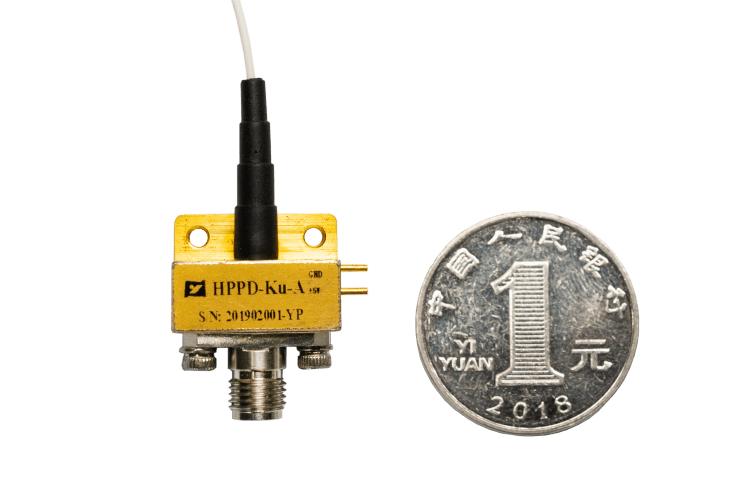
For automotive and industrial LiDAR applications, compact size, high speed, and robustness are essential. This has driven the adoption of on-chip balanced photodetector circuits based on photonic integrated circuits (PICs).
Key Design Features
- Symmetrical bridge-type transimpedance amplifiers
- Early-stage common-mode noise cancellation
- Tight electrical and optical path matching on silicon
Operating mainly at 1550 nm, these designs are optimized for eye-safe, long-range FMCW LiDAR systems.
Real-World Results
- Approximately 20 dB improvement in CMRR
- Typical values around 49 dB
- Up to 100× improvement in SNR
- Improved resistance to temperature and vibration
High-Frequency Challenges: Phase and Packaging Effects
At high frequencies, CMRR is no longer limited only by photodiode matching.
Phase Mismatch: Micrometer-level differences in signal path length can introduce phase shifts that prevent perfect cancellation, especially at GHz frequencies.
Packaging Parasitics: PCB-level implementations introduce parasitic inductance and capacitance that vary with temperature and mechanical stress. This is why modern high-performance balanced photodetector circuits increasingly rely on silicon photonics integration to ensure stability and repeatability.
Applications of High-CMRR Balanced Photodetectors
Advancements in balanced photodetector design directly benefit:
- Coherent optical communication systems
- Precision spectroscopy and interferometry
- Quantum optics and photonic research
- FMCW LiDAR for autonomous vehicles
In autonomous driving, higher CMRR enables longer detection range, improved performance in fog or rain, and more reliable object recognition.
The evolution of the balanced photodetector is moving away from manual component matching toward intelligent architecture and photonic integration. By addressing diode mismatch, phase alignment, and packaging parasitics, modern balanced photodetector circuits achieve higher CMRR, better stability, and superior system-level performance.
Technical FAQ: Balanced Photodetectors & CMRR
Q1: What is a balanced photodetector used for?
A balanced photodetector is used to detect weak optical signals while suppressing common-mode noise, especially laser intensity noise. It is widely used in coherent communication, LiDAR, and interferometric systems.
Q2: What is CMRR in a balanced photodetector?
CMRR (Common Mode Rejection Ratio) measures how effectively a balanced photodetector cancels noise that appears on both inputs. Higher CMRR means better noise suppression and higher signal-to-noise ratio.
Q3: What limits CMRR in traditional balanced photodetector circuits?
CMRR is limited by mismatches in photodiode responsivity, capacitance, temperature behavior, and parasitic elements, as well as phase mismatch at high frequencies.
Q4: How can CMRR be improved?
CMRR can be improved through better photodiode matching, symmetrical circuit design, single-element detection architectures, and photonic integrated circuit (PIC) implementation.
Q5: Are balanced photodetectors suitable for LiDAR?
Yes. High-CMRR balanced photodetectors are essential for FMCW LiDAR systems, where weak reflected signals must be detected in the presence of a strong local oscillator.