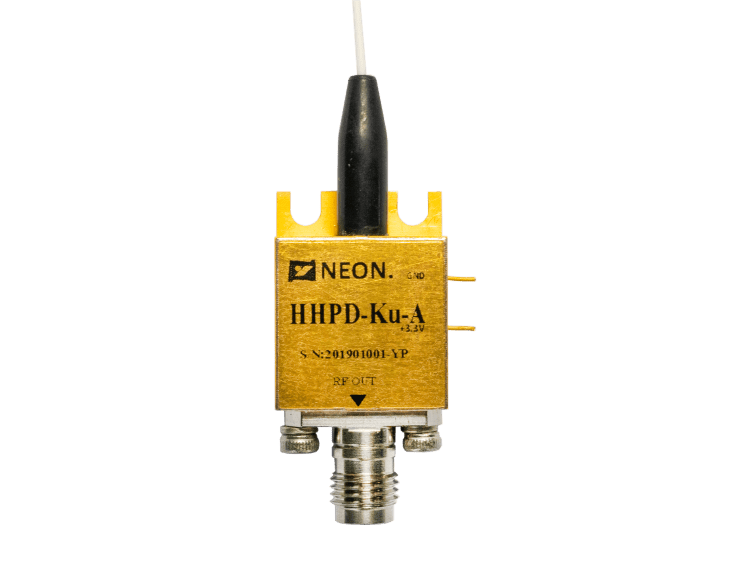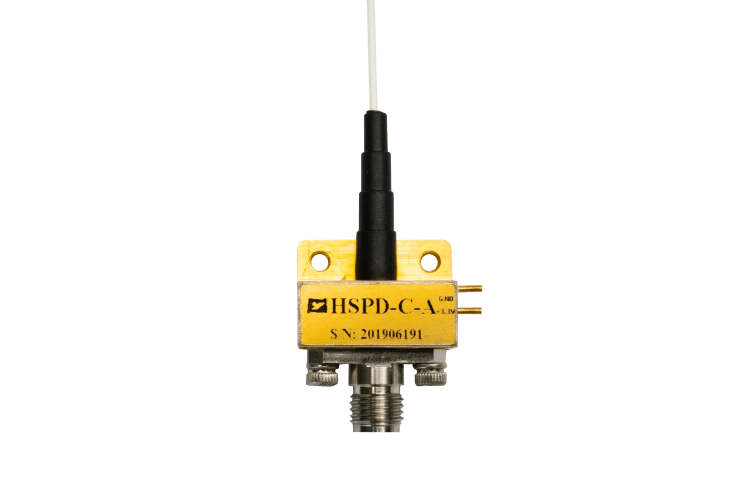

Amplified Photodetector for Microwave Photonic Radar
The ongoing evolution of contemporary radar technologies is characterized by a need for enhanced definition, an expanded frequency range, and distributed capacities in resisting electromagnetic interference (EMI). Owing to coaxial transmission losses and mixer phase jitter, the development of earlier radar front-ends deployed in the microwave regime or X-band is attributed to the challenges those front-ends faced in implementing fully wideband operation at Ku band.
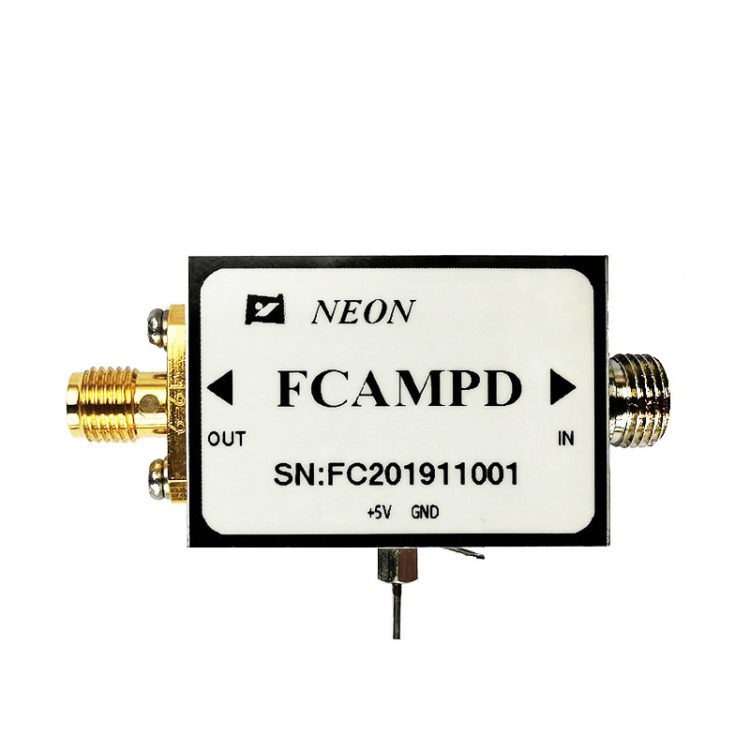
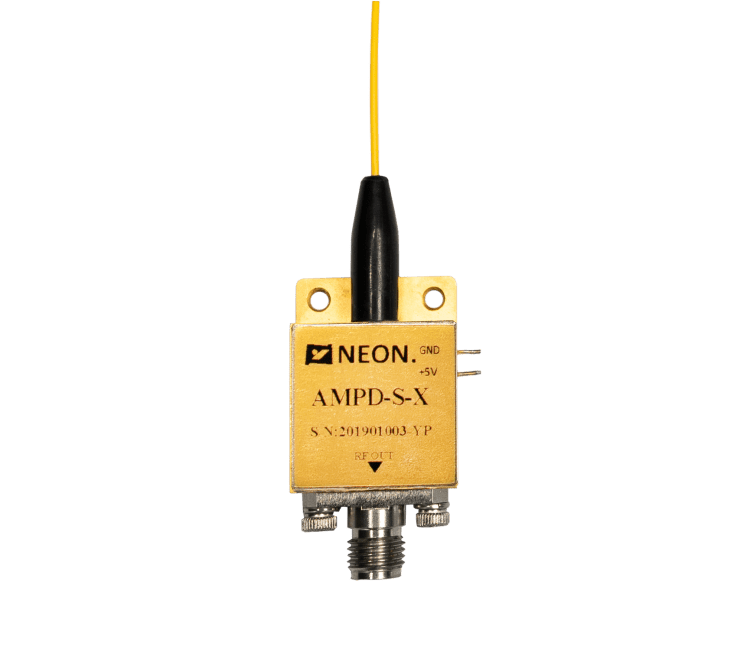
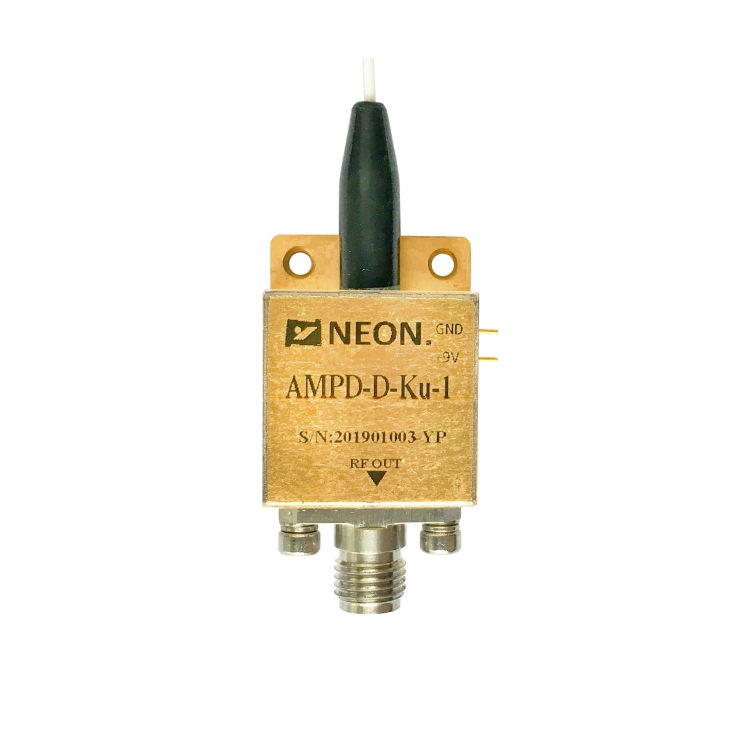
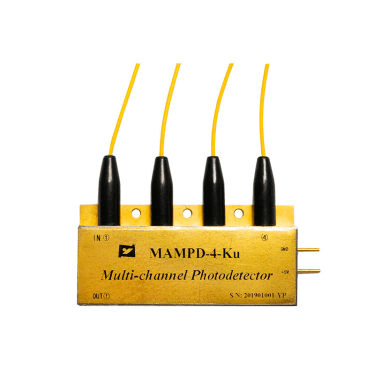
Microwave photonics radar, in this particular case, has presented itself as a vehicle with revolutionary potential. The hard part of this process is somewhat technical: to wit, the amplified photodetector. Amplified photodetectors can rely on the solution of signal loss and noise issues by integrating a high-speed photodiode and a low-noise microwave amplifier on the same chip.
In detail, this paper discusses radar applications, in which case it highlights and explaining why photo detectors with gain in general or photodetectors with gain based on UTC InGaAs diodes are of most importance for new radar and electronic warfare systems.

Why Conventional Photodetectors Fall Short in Radar Front-Ends
Radar receivers operate under extreme conditions:
- Ultra-wide instantaneous bandwidth
- High peak-to-average signal ratios
- Long-distance signal transport between antenna and processing unit
Conventional PIN photodetectors suffer from inherent physical limitations when exposed to high optical input power. In standard PIN structures, both electrons and holes contribute to photocurrent. However, in InGaAs materials, hole mobility is approximately 20 times slower than electron mobility.
At high optical power levels, slow-moving holes accumulate within the absorption region, forming a space-charge field that partially cancels the external bias. This phenomenon leads to:
- Severe bandwidth compression
- Nonlinear distortion
- Early saturation
For radar systems that rely on linear, broadband signal capture, these effects directly limit detection accuracy and dynamic range.
UTC-Based Amplified Photodetector: A Structural Breakthrough
The introduction of the UTC photodetector architecture represents a milestone in high-speed photodetection. Unlike PIN devices, UTC photodetectors ensure that only electrons act as active carriers.
1. UTC Operating Principle
- Optical absorption occurs in a P-doped neutral absorption layer
- Photo-generated holes rapidly recombine within picoseconds
- Only electrons drift across the collection layer under the applied electric field
This single-carrier transport mechanism eliminates hole accumulation entirely, enabling significantly higher linear output power.
2. Performance Advantages for Radar
UTC-based amplified photodetectors deliver:
- Bandwidths of 18 GHz and beyond, covering X-band and Ku-band radar
- High saturation photocurrent, ideal for driving microwave amplifiers
- Stable responsivity around 0.85 A/W, preserving detection sensitivity
These characteristics make UTC structures uniquely suited for wideband radar receivers and photonic frequency conversion systems.
Integrated Microwave Amplification: Why “Amplified” Matters
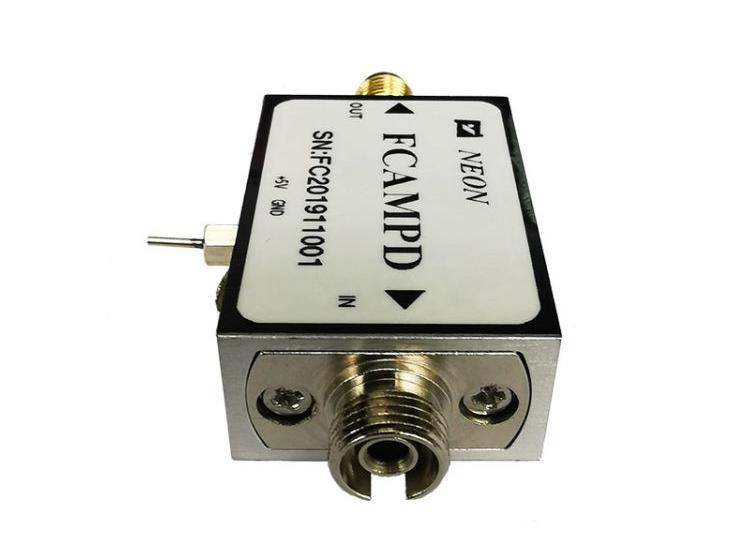
In radar front-ends, the photodetector output is often several meters away from subsequent RF processing stages. Without amplification, microwave signals suffer immediate degradation due to impedance mismatch and transmission loss.
An amplified photodetector integrates a low-noise microwave amplifier (typically ~15 dB gain) directly within the same package.
Key Radar Benefits:
- Improved signal-to-noise ratio (SNR) at the receiver input
- Reduced reliance on external RF amplifiers
- Cleaner impedance matching across wide frequency bands
For microwave photonics radar, this integration is not optional—it is a prerequisite for practical deployment.
Packaging and SWaP-C Optimization for Radar Platforms
Radar platforms increasingly operate under strict SWaP-C (Size, Weight, Power, and Cost) constraints, particularly in airborne and spaceborne systems.
1. OE Hybrid Integration
Advanced amplified photodetectors adopt optical-electrical hybrid integration, co-packaging:
- InGaAs UTC photodiode
- GaAs or GaN microwave amplifier circuitry
This minimizes parasitic inductance and ensures consistent RF performance across the full operating band.
2. Environmental Reliability
Radar systems must remain stable across extreme environments. Hermetically sealed amplified photodetectors typically support:
- Operating temperature range from −45 °C to +85 °C
- Long-term bias and gain stability
3. Lightweight Advantage
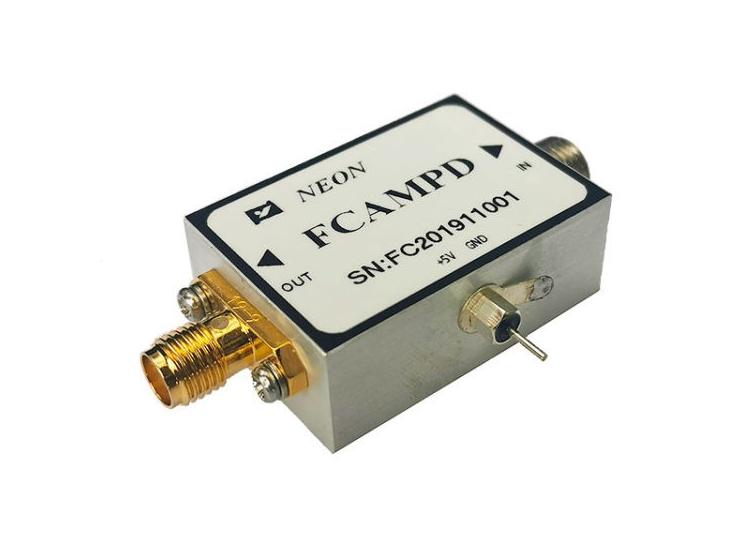
With total mass below 23 grams, modern amplified photodetectors are well suited for:
- UAV-borne radar payloads
- Spaceborne synthetic aperture radar (SAR)
- Mobile electronic warfare platforms
Core Radar Applications Enabled by Amplified Photodetectors
1. Microwave Photonic Radar Front-Ends
Amplified photodetectors enable direct optical-to-microwave conversion with minimal distortion, forming the backbone of photonic radar receivers.
2. Optical Frequency Down-Conversion
By using a laser as an optical local oscillator, wideband RF signals can be mixed and down-converted in the optical domain. This approach:
- Eliminates bulky electronic mixers
- Reduces phase noise
- Enhances frequency agility
3. EMI-Resistant Radar Architectures
Transporting RF signals as optical carriers over fiber ensures:
- Complete immunity to electromagnetic interference
- Electrical isolation between antenna and processing units
This is particularly critical in dense battlefield electromagnetic environments.
Resolution Enhancement in Wideband Radar
Radar range resolution is directly proportional to bandwidth:
Δr=c/2B
With 18 GHz bandwidth, radar systems achieve centimeter-level resolution, enabling:
- Accurate discrimination of small UAV targets
- Enhanced situational awareness in low-altitude airspace
- Improved clutter suppression in complex environments
Amplified photodetectors make such bandwidths practically usable without sacrificing linearity.

Market and Technology Trends in Radar Photodetection
Between 2024 and 2026, the amplified photodetector market is increasingly shaped by radar and defense demand. Key trends include:
- Shift from bandwidth-only competition to integration density and thermal stability
- Growing preference for UTC-based architectures
- Increased emphasis on supply chain independence for InGaAs and UTC processes
Manufacturers capable of delivering Ku-band performance with compact, lightweight integration are rapidly gaining strategic relevance.
It can be inferred that, over time, radar would move towards photonics architecture, especially at microwave wavelengths. This is essential in that amplified photodetectors allow enhanced resolving power, increased resistance to external noise, and more capable utilization in different areas such as air, space, and land.
FAQs
Q1: Why are amplified photodetectors important for microwave photonic radar?
They compensate for RF transmission loss after photodetection, reduce external amplifier requirements, and preserve wideband linearity essential for X-band and Ku-band radar.
Q2: How does a UTC amplified photodetector improve radar performance?
UTC (Uni-Traveling-Carrier) structures eliminate hole accumulation, allowing higher saturation current, wider bandwidth (≈18 GHz+), and lower distortion—critical for accurate radar signal processing.
Q3: Can amplified photodetectors support X-band and Ku-band radar?
Yes. Modern InGaAs UTC amplified photodetectors are designed specifically to cover X-band (8–12 GHz) and Ku-band (12–18 GHz) radar applications.
Q4: Are amplified photodetectors suitable for EMI-heavy radar environments?
Absolutely. By transmitting RF signals over optical fiber, they provide strong immunity to electromagnetic interference—ideal for electronic warfare and battlefield radar.