
How to Mitigate 2nd-Order Harmonic Distortion in UWB Optical Transmitters
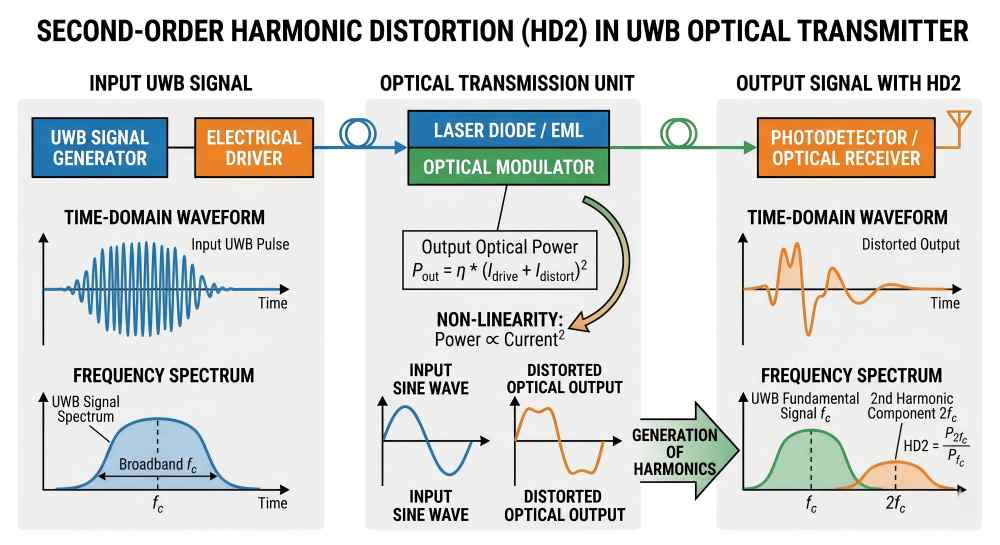
A significant technical hurdle in the deployment of Ultra-Wideband (UWB) optical links is second-order harmonic distortion (HD2). HD2 arises in high-frequency microwave photonics when the second harmonic of a fundamental signal falls within the bandwidth of the receiver. This causes a decrease in Spurious Free Dynamic Range (SFDR) and signal integrity degradation. To obtain linearity over a multi-octave range for a UWB optical transmitter, which can be from 10 MHz to 18 GHz or higher, a multi-layered strategy is required. This article discusses technical solutions such as precise bias control of external modulators, balanced detection architecture, and electronic pre-distortion to stabilize high-frequency performance.
Physics of 2nd-Order Harmonic Distortion in UWB Links
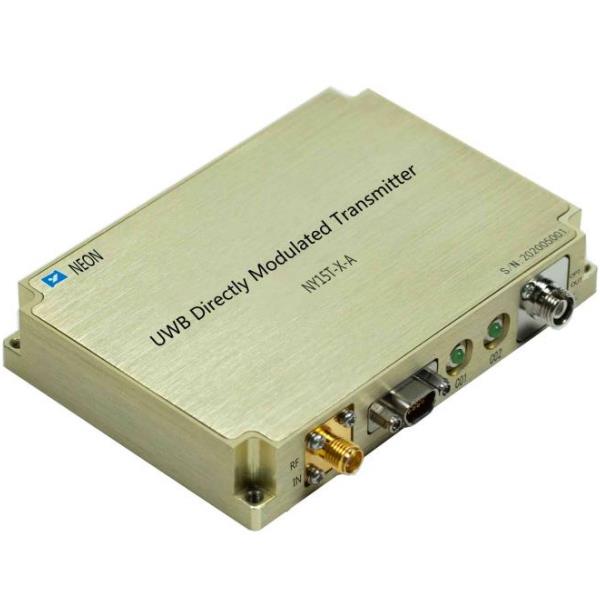
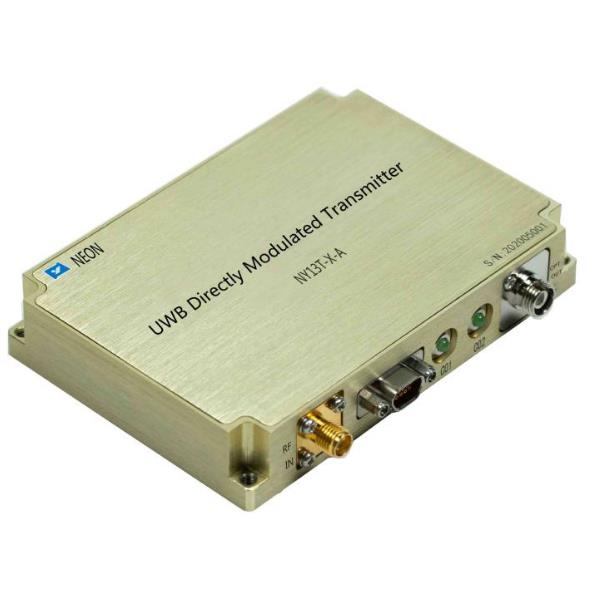
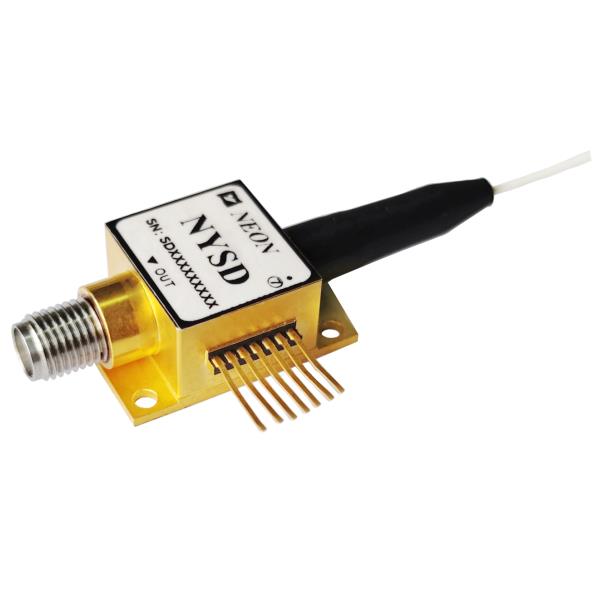
The origin of HD2 in a UWB optical transmitter is the non-linearity of the electric-to-optic (E/O) conversion process itself. In a UWB DML laser (Directly Modulated Laser), the distortion is mainly due to the non-linear relation between injection current and output optical power, the so-called L-I curve. Furthermore, the non-linearity becomes frequency dependent for high modulation speeds due to the carrier-photon interactions leading to relaxation oscillations.
In external modulation systems utilizing Mach-Zehnder Modulators (MZM), the transfer function is inherently sinusoidal. The output power Pout is related to the input voltage Vin by the following equation:
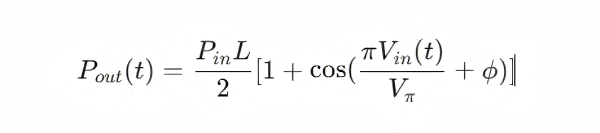
Where Vπ is the half-wave voltage and ϕ is the phase bias. If the bias point ϕ deviates from the ideal quadrature point, the symmetric nature of the transfer function is lost, resulting in the generation of even-order harmonics, specifically HD2.
Precision Biasing in External Modulation
The most effective method to nullify HD2 in an MZM-based UWB optical transmitter is to lock the device at the Quadrature Bias (QUAD) point. At this point, the modulator operates in the most linear portion of the sine wave. Theoretically, an ideal MZM at QUAD produces only odd-order harmonics (such as HD3), while all even-order products are suppressed.
However, the QUAD point drifts over time due to environmental effects such as temperature variations and DC bias. To maintain long-term stability, engineers use an Automatic Bias Control (ABC) system. The ABC board injects a low amplitude, low frequency pilot tone (usually in the kHz range) into the DC bias port. The controller is based on a tap coupler and a photodiode to monitor the output optical signal and a lock-in amplifier to detect the second harmonic of the pilot tone. Next, the DC bias is adjusted in real time to minimize this harmonic, which guarantees that the HD2 is suppressed even during thermal cycling.
Balanced Detection Architecture
In systems where the modulation bandwidth is extremely wide, such as those exceeding 20 GHz, electrical filtering of HD2 is impossible because the harmonic resides within the signal band. In such cases, a balanced detection architecture is utilized. This setup requires a dual-output modulator (or a 180-degree optical hybrid) and a balanced photodetector.
The fundamental RF signal is split into two paths with a 180-degree phase shift. When these signals are converted back to the electrical domain at the balanced receiver, the fundamental components add constructively. In contrast, the second-order distortion products, which are generated in-phase relative to the carrier, add destructively and cancel out. This differential configuration provides a Common Mode Rejection Ratio (CMRR) that can improve HD2 suppression by 20 to 30 dB compared to a single-ended link. Furthermore, this method significantly reduces the Relative Intensity Noise (RIN) of the laser source.
Electronic Pre-Distortion and Compensation
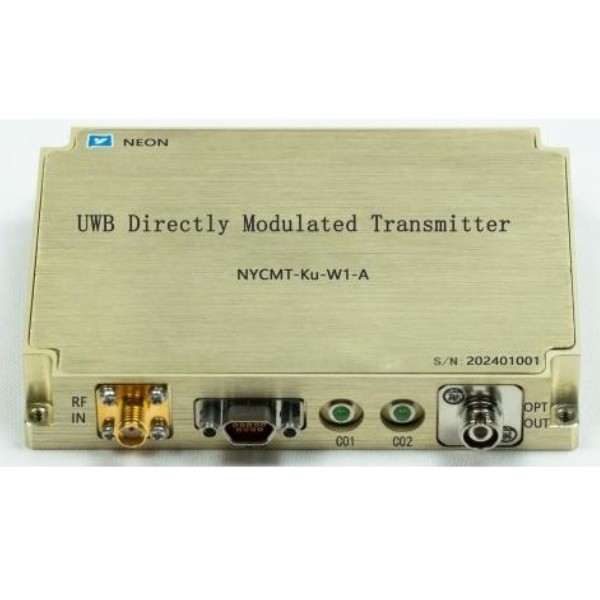
For a UWB DML laser, where external modulation may be too bulky or expensive, Electronic Pre-Distortion (EPD) is the preferred mitigation approach. EPD is based on the modification of the RF signal prior to the laser diode to compensate for the known non-linearities of the E/O stage.
- Analog Pre-Distortion: Engineers integrate a diode-based non-linear circuit into the RF signal path. This circuit is tuned to generate a second-order harmonic that is equal in magnitude but opposite in phase to the harmonic produced by the UWB DML laser. When the pre-distorted RF signal modulates the laser, the two distortions cancel out.
- Operating Bias Optimization: In practical engineering, HD2 in a DML laser is highly dependent on the bias current. By increasing the DC bias current to a level significantly above the threshold, the laser can operate in a region characterized by a more linear L-I slope and a higher relaxation oscillation frequency. This transition reduces the relative amplitude of second-order products, but may necessitate more reliable thermal management through thermoelectric cooling (TEC).
- Digital Pre-Distortion (DPD): In digital communication contexts, such as 5G/6G signal distribution, DPD algorithms are applied at the baseband. Using Volterra series modeling, the system characterizes the non-linear transfer function of the optical link and applies an inverse mathematical transform to the digital data before it is converted to an analog RF signal.
Technical Specifications and Industry Comparison
Selection of the mitigation technique is based on the actual needs of the microwave photonics link in terms of performance. The performance measures usually realized using each technique are shown below in the table.
| Mitigation Technique | HD2 Suppression (dBc) | Complexity | Bandwidth Limitation |
| ABC (MZM QUAD Bias) | 25 – 35 | Moderate | None |
| Balanced Detection | 35 – 50 | High | Requires Dual-Fiber/Hybrid |
| Analog Pre-Distortion | 15 – 25 | Low | Frequency Dependent |
| DML High-Bias Optimization | 10 – 20 | Very Low | Power Consumption Issues |
Standard industrial requirements for electronic warfare and radar testing often demand an SFDR exceeding 110 dB·Hz²/³. Achieving this level of performance in a UWB environment is only possible when HD2 is suppressed below the noise floor of the system.
Technical FAQ
Q1: Why is HD2 more critical than HD3 in UWB systems?
A1: In narrow-band systems, both HD2 and HD3 often fall outside the filter range. However, in UWB systems (e.g., 2–18 GHz), the second harmonic of 4 GHz is 8 GHz, which is directly in the middle of the operating band, making electronic filtering impossible.
Q2: How does fiber dispersion affect harmonic distortion?
A2: Chromatic dispersion in standard single-mode fiber (SMF-28) causes a phase shift between the optical carrier and the sidebands. Over long distances, this phase shift interacts with the laser chirp, converting phase modulation into amplitude distortion, which increases the HD2 measured at the receiver.
Q3: Is a UWB DML laser suitable for high-dynamic range radar?
A3: A UWB DML laser is generally used for short to medium distance links where size and power consumption are critical. For the highest dynamic range, an MZM-based UWB optical transmitter with balanced detection is required to achieve the necessary SFDR values.